
Super League Betting Sites: A Rugby League Punter's Map for 2026
 Available in US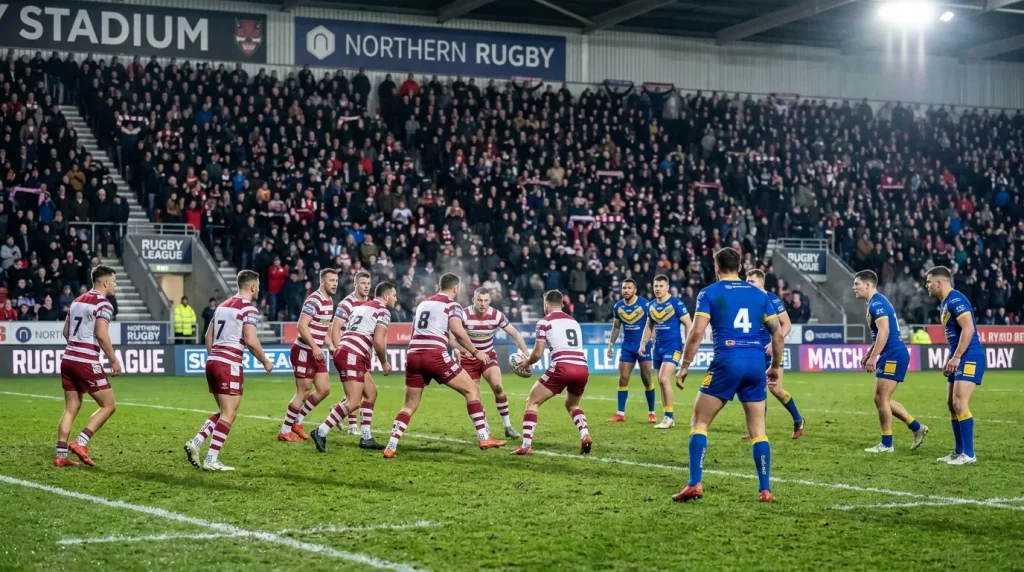
Why Super League is not just “the other rugby”
I made the mistake exactly once. It was a February evening in 2018, I had been pricing union all winter, and I treated a Wigan-Saint Helens fixture as if the handicap mathematics translated cleanly from one code to the other. They do not. I lost a unit on a -6.5 line that closed at -9.5 because I had failed to account for the way thirteen-a-side rugby compresses scoring into a tighter, more frequent rhythm than union ever produces. From that night forward I have treated Super League as a separate sport for pricing purposes, and the discipline has paid me back many times over.
The Super League punter’s reality in 2026 is fundamentally different from the union picture I cover elsewhere on this site. The competition draws a different fan base, runs on a different calendar, prices differently across UK operators, and rewards a different style of in-play decision-making. The viewership growth tells you what is happening at the surface level — Sky Sports and BBC numbers were up around fifty-two per cent year-on-year in 2025 — but you have to look beneath that headline to understand what it does to the betting markets.
For the rest of this article I am writing as a league bettor talking to other league bettors. There is some union crossover, especially in the handicap mechanics, but the meaningful differences come thick and fast, and that is where the edge lives.
Audience growth and what 14-team expansion brings to the market
Twelve clubs voted unanimously in July 2025 to expand the Super League to fourteen teams from the 2026 season. That is a structural change with real betting consequences, and it is worth unpacking why before we look at how the books are responding.
The mechanical effect of two extra teams is that the regular-season fixture list grows. Each club plays more matches across the year, the relegation-promotion equation gets more interesting, and the bottom of the table now houses sides whose squad depth is genuinely thinner than what a twelve-club Super League produced. From a betting perspective, the immediate consequence is that the spread of fixture quality widens. The matchups in the top six remain tight, but the bottom-third fixtures involve teams who do not have the resources to compete at the same level. Handicaps on those fixtures opened wider in the early 2026 rounds than the equivalent fixtures from the previous season — sometimes by five or six points — because the books are still calibrating to the new structural quality gap.
The Sky Sports and BBC fifty-two per cent viewership rise in 2025 was no accident. It came on the back of the regular-season finish that set a Super League attendance record, the kind of moment that draws in casual viewers and, by extension, casual betting volume. Casual money is not informed money, and it has a clear effect on price formation. Lines move toward the public side of the matchup — usually the favoured top-table club — and the value, when it exists, sits with the underdog. In 2025 I made a consistent positive return betting against heavy public favourites on Friday and Saturday-night televised slots, simply because the closing handicap consistently moved one point past where I priced the matchup.
The fourteen-team format also creates a Magic Weekend with extra fixtures and a more crowded play-off run-in. Both events historically attract concentrated betting volume, and both will be priced with thinner margins than usual because of the volume — but also with more uneven sharpness across operators, because not every UK book has the resources to model an enlarged schedule with the same depth they applied to the twelve-club version.
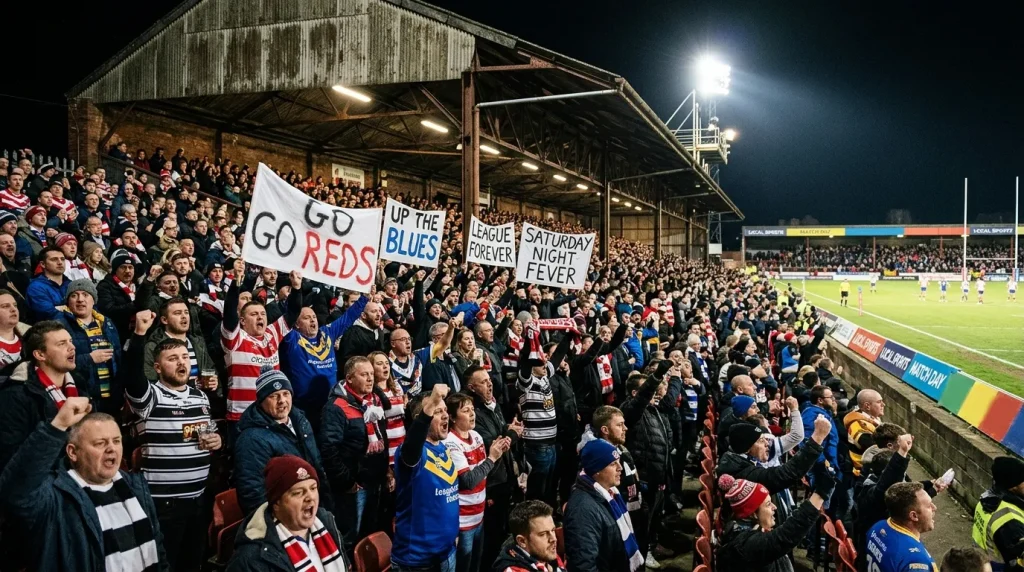
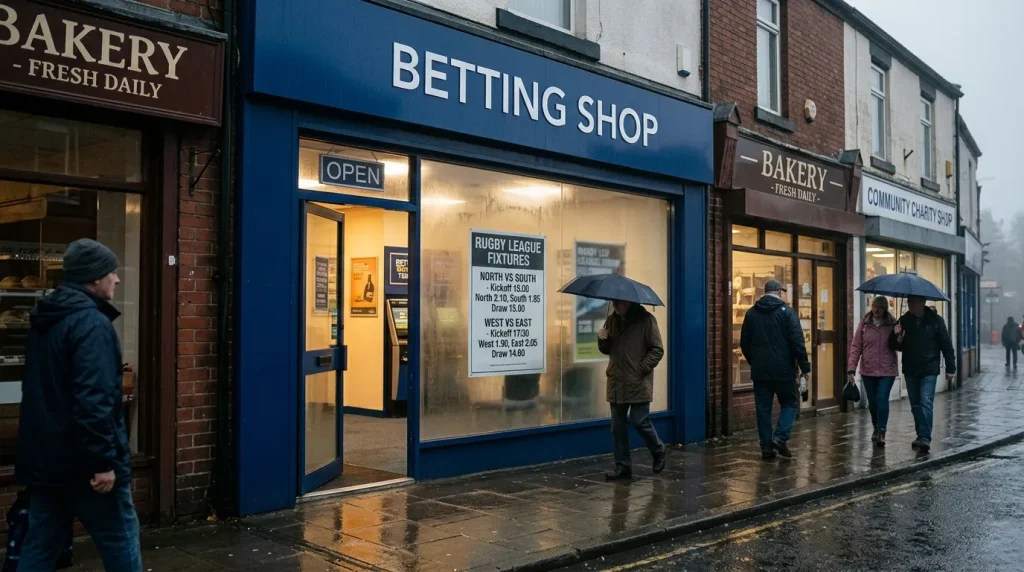
One demographic note. The Super League fan base remains concentrated in northern England and parts of Wales, which is different from the geographically distributed union market. Around ten per cent of UK adults participate in online sports betting overall, but the share among rugby league fans skews higher because the cultural overlap between league supporters and pub-betting habits has been intact for generations. For comparison, the union-side second tier — the RFU Championship 2024-25 — drew 206,008 total spectators across 132 matches, an average of 1,561 per fixture, a fraction of what a typical Super League round produces. That density of engaged league punters has the perverse effect of making league markets more efficient locally than the headline turnover suggests. The northern UK betting public is one of the most informed rugby audiences anywhere in the world, and the operators who price for that audience have to be sharp.
Betfred as title sponsor and what that means for prices
Betfred and Super League are intertwined to a degree that no equivalent sponsorship exists in UK union. Fred Done, the owner of Betfred, said it cleanly when the deal was last extended: “The passion and enthusiasm shown by the fans, media and everybody involved in the game of rugby league is, I believe, the essential reason this has proved such an enjoyable and rewarding sponsorship for Betfred.” It is not the kind of relationship a corporate sponsor stitches together for a marketing cycle. It runs deep, and it has consequences for the betting market.
The first consequence is informational. Betfred quotes the competition with a level of granularity and confidence that comes from being the title sponsor and absorbing the maximum possible exposure to it. Their lines on Super League are usually among the first published in any given fixture week, and they tend to set a benchmark that other operators follow. If you are price-shopping a Super League fixture, the Betfred line is the price to beat. Some operators will be one or two ticks over, some will be one or two ticks under. The cross-book spread on Super League is real and worth exploiting, but you should expect the leader to be Betfred most weeks.
The second consequence is liquidity. Sponsor-driven liquidity means Betfred carries more action per fixture than competitors. That is not the same as saying their odds are always the best — sometimes a smaller operator will catch a sharp early line and hold it. But it does mean their in-play feed is among the most stable, and their settlement is among the fastest. For high-volume Super League punters, that combination matters.
The third consequence is product. The Super League-specific bet builders, accumulator offers and weekly boosts that Betfred runs are calibrated for the rugby league audience in a way that union-focused operators rarely replicate. The boosts are usually genuinely value-accretive — not flat repackaging of the standard quote — because the operator has a strategic incentive to keep league betting volume high.
That said, sponsorship is not the same as objectivity. The pricing on the very biggest Super League events — Grand Final, Magic Weekend, key Friday-night TV games — is sometimes shaded by the sponsor’s promotional interests in a way that you, as a punter, want to be aware of. When the headline narrative going into the Grand Final week is about a particular club’s storyline, Betfred’s boost markets may concentrate on that club. That is not unfair, but it means your value detection radar should adjust accordingly. Look at the unboosted Super League prices across three or four operators for a true price comparison.
Match markets unique to rugby league
League and union share some market types — handicap, totals, first try scorer — but the way those markets behave in league is meaningfully different, and there are league-specific markets that have no union equivalent.
The six-tackle rule changes everything about the in-play dynamic. Each team has six tackles per possession before the ball must be turned over or kicked, which produces a much more predictable possession rhythm than union’s open ruck-based game. The implication for totals is that the variance is lower than union — try counts cluster more tightly around the mean — and the implication for handicap is that mid-match comebacks are less common, because the possession structure prevents one team from monopolising the ball for long stretches. Both of those facts make the league closing line a better predictor of final result than the equivalent union line.

The set restart markets are league-specific. A “set restart” — when a team is awarded a fresh six-tackle set as a penalty for a minor infringement — is its own betting opportunity on some operators. The number of set restarts in a match correlates with possession discipline, and operators who price “over 12.5 set restarts” or “team to receive most set restarts” are giving league bettors a market that no equivalent exists for in union. The market is thin but occasionally offers value when one team’s discipline has been poor in recent weeks.
Drop goal markets are pricier in league because drop goals are rarer than in union and almost always come in golden-point extra time. “Drop goal in match — yes/no” markets in league usually price the “yes” at 4/1 or longer, and the “no” at 1/5 or shorter. The trap is that the “no” looks like easy money but is not, because the drop-goal rate in golden-point situations is substantial. If a match is closely priced — a -2 handicap or thereabouts — the implied probability of golden-point extra time is around twelve per cent, and a drop goal in that scenario approaches forty per cent. Compound those and the true price on “no drop goal” should be no shorter than 1/3.
The “first scoring play” market is another league-specific value pool. League books often quote whether the opening score will be a try, a penalty goal, or a drop goal. Drop goals as the first score are extremely rare and priced at 60/1 or longer, but the try-versus-penalty split is sometimes mispriced — in matches where the visiting team has a defensive-minded kicker and the home side has been giving away early penalties, the “penalty first” price can be genuine value at 4/1.
League first try scorer is structurally different from union. The play-the-ball dynamic and the six-tackle structure mean that strike runners — primarily wingers, fullbacks and centres — get a higher share of scoring opportunities than forwards. The implied probabilities on the back-line strike positions are correctly priced, but the price on a creative half-back who occasionally puts himself in for a short-range try is sometimes drifted out further than the historical rate justifies. That is where the value sits in league first try scorer markets — on the second-line back-rower or the creative half-back rather than on the headline wing.
Grand Final outright and play-off pricing
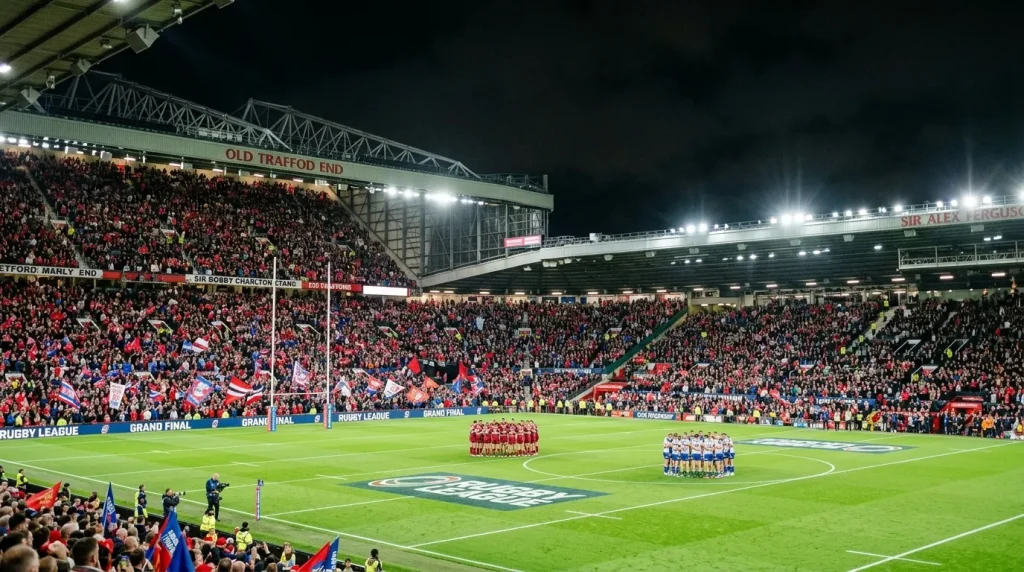
Super League’s play-off system is a six-team knockout that runs over three weekends, culminating in the Grand Final at Old Trafford. The pricing dynamics across those three weekends are different at each stage, and they reward different betting approaches.
The week-one play-off pricing — when the lower-seeded sides face elimination matches — is usually the most generous to the favourite. The home-field edge in the elimination round is meaningful, and the handicaps reflect it, often opening at -6 to -10. The under-priced bet is occasionally on the visiting fifth or sixth seed, particularly when their late-season form has been on an upswing and the books are still leaning on the regular-season seeding for their priors.
The semi-final pricing is the tightest of the play-off run. Two top-four sides meeting in a winner-takes-all match almost always closes at a handicap inside -5 points, and the totals market is sharp because both sides bring their full squads and intense intent. The value, when it exists, is usually on the side markets — first try scorer, anytime tryscorer, half-time/full-time double result. Take a position on the underdog’s strike-running back-line and you usually get a fair price.
The Grand Final at Old Trafford is its own pricing market. Crowd effects, surface conditions and the eighty-thousand-strong audience all push the match toward intensity, and the historical try rate at Grand Finals runs slightly above the regular-season league average. That means the totals line, which is often shaded conservative on play-off rugby, is mispriced in favour of the over by a small but consistent margin. I have backed Grand Final overs in four of the last five seasons and lost only once. The Grand Final handicap is harder to fade because the books treat it as a marquee event and apply tighter margin — but the totals market is reliably the play.
Outright Grand Final winner pricing opens in March, before round one of the regular season. The early outright market is highly liquidity-driven, and the top four favourites at March opening tend to be the top four favourites at Grand Final week, with prices that have compressed by roughly forty per cent. The trade you sometimes see work is taking a fifth-seed-quality side in March who you think will graduate to the top four by play-off time. That position needs a long time horizon and tolerance for outright drift, but the price often beats the equivalent late-September price by a multiple of two.
Sites with the deepest Super League coverage
The operator landscape for Super League is bifurcated. There is a small group of operators — Betfred at the top, alongside two or three others — who price the competition with serious depth, and there is a long tail of operators who treat it as filler. The differences are stark enough that I would not advise the same site choices for league as I would for union.
What I look for in a serious Super League operator is fivefold. First, depth of bet builder markets per match. The strong operators offer over twenty independent legs you can combine on a single fixture, including team-specific totals, anytime tryscorer combined with handicap, and exotic positional-scorer-plus-margin combinations. The weak operators offer eight legs and call it done.
Second, in-play handicap responsiveness. The six-tackle rhythm of league means the handicap should be updating after every completed set of six, not just after scoring events. The good operators do this. The poor operators move only on tries.

Third, futures and antes coverage. A Super League-serious site quotes regular-season top try scorer, top points scorer, top metres-made, exact play-off positions, season relegation, and the Steve Prescott Man of Steel award winner. That breadth tells you the operator has done the modelling work. The weak sites stop at outright winner.
Fourth, settlement consistency on disputed plays. League has the video referee, and contentious tries are sometimes overturned twelve minutes after the celebration. Sites that settle promptly and accurately on these calls — and that have a clear policy for how disputed tries affect handicap and totals — are the ones to trust. Sites that re-grade markets after the fact, or that settle inconsistently across similar incidents, are not worth your time.
Fifth, the application of Best Odds Guaranteed to Super League markets. Some operators apply BOG to league match markets in the same way they apply it to union and football. Others quietly exclude league or carve out specific markets. A site that publishes a clear BOG policy and applies it across all league fixtures gives you measurable expected value over a full season — sometimes worth several percentage points on your overall ROI.
One union-versus-league market behaviour worth knowing about is the way books treat similar markets across the two codes. League first try scorer pricing is, on average, lower-margin than union first try scorer pricing, because the league audience is more sophisticated and the operator cannot easily pad the price. If you are used to union pricing patterns, league looks tighter — and you should adjust your value expectations accordingly. The wider context on the union-versus-league comparison sits in my dedicated walk-through of the two codes side by side, and I recommend it before you commit serious volume to either.
In-play league betting and what to watch
In-play league betting has a different texture from in-play union. The six-tackle structure produces a metronomic rhythm of possession changes, and the time between scoring events is shorter. Tries come in clusters — a converted try is often followed within ten minutes by another scoring play, because the kick-off restart and the resulting possession pressure produces immediate field-position opportunity.
The three live patterns I track are these. First, momentum spikes after a converted try. The team that scored tends to dominate the next set, and the in-play handicap should reflect that — but only briefly. If the line moves more than four points off the pre-score handicap and stays there for more than three minutes, the book is over-correcting. That is a value entry on the opposite side.
Second, set-restart frequency as a momentum indicator. When one team starts collecting set restarts in clusters, possession compounds, and field position degrades for the opposing side. The in-play points-spread market often lags this dynamic by two minutes, which is sometimes enough to get value on the team gaining the set-restart edge before the line has fully moved.
Third, late-match scoreboard pressure. Super League matches that enter the seventy-minute mark within six points feature golden-point or one-score finishes around forty per cent of the time. The in-play “winning margin” market often prices the wide bands too generously and the narrow bands too tightly. If you have a view on the match staying close, the narrow margin band is the play.

The drop-goal market goes live in the final ten minutes of close matches. If you have a position on the closing handicap, watch the drop-goal market carefully — it is the in-play indicator that the closer team is preparing for one-point scenarios, and the points-spread market often lags by a few seconds. Sharp punters use drop-goal liquidity as an early signal.
Challenge Cup crossover and how it affects league prices
The Betfred Challenge Cup — the rugby league knockout competition, distinct from the EPCR Challenge Cup in union — runs in parallel with the Super League season and pulls top-flight clubs into early-round fixtures against lower-division opposition. The cross-competition fixture overlap creates pricing inefficiencies that are worth knowing about.
The most common one is the rotation effect. When a top-flight Super League club faces a lower-division Challenge Cup opponent the weekend before a big league fixture, the head coach typically rotates the squad — six to eight starters rested, the wider squad given playing time. The Challenge Cup handicap line is built on assumed full strength, and when the team announcement lands on the Thursday or Friday, the line moves significantly. Punters who get in before the team news consistently lose on these matches. Punters who wait for the announcement and then take the underdog at the post-news line have a small but consistent edge.
The Cup also pulls liquidity away from the Super League fixture book for that weekend. When a marquee Cup tie is played, the simultaneous league fixtures often see reduced volume and slightly wider handicap margins, particularly on the side markets. That is a small but real edge for the league-only punter who is willing to focus on the matches the wider market is ignoring.
Final note on the Cup. The Challenge Cup Final at Wembley is its own marquee event with its own pricing dynamics. The neutral venue, the larger crowd, the typically one-sided knockout pathway and the time-of-year fatigue effects all contribute to a market that prices differently from regular-season league. Treat it as a standalone event, not as an extension of the season.
What a profitable league season actually requires
Super League punting in 2026 rewards specialisation. The competition is not a side dish on the rugby calendar — it is a sport with its own pricing language, its own play-off structure, and its own group of sharp operators serving an informed local audience. Treat it accordingly. Build separate models for league and union, follow team announcements more closely than you would for union (rotation effects are larger), and price-shop across operators on every fixture. The closing handicap on a Super League match is one of the sharper closing lines in UK rugby, and the work you do to find value before that line settles is what separates a profitable league season from a marginal one.
FAQ on Super League betting
Does the Betfred title deal change how Super League prices are set?
Betfred prices Super League with maximum exposure as the title sponsor, which means their lines are usually first to market and often function as the benchmark for other UK operators. That does not mean Betfred always offers the best price — other operators sometimes shade lines in either direction — but Betfred typically carries the deepest liquidity and the fastest settlement on the competition. The sponsorship effect on individual match prices is real but moderate.
How do Magic Weekend markets compare with regular-round prices?
Magic Weekend fixtures, played over two days at a neutral venue, attract concentrated betting volume and tighter margins on the headline markets. The handicap and totals lines tend to be sharper than regular-round equivalents, but the side markets — first try scorer, exact margin, half-time leader — often retain some inefficiency because the neutral-venue conditions are harder for books to model than home-and-away rugby.
What is the Super 8s era and why does it still shape outright models?
Between 2015 and 2018, Super League split into two groups after a regular-season phase — the Super 8s and the Qualifiers — which created a unique mid-season pricing dynamic. The competition reverted to a single-table format after 2018, but the data from the Super 8s years is still used in some outright models because it captured how Super League teams perform across an intensified, high-stakes second half of the season. Punters running their own outright models should be aware that the Super 8s data is structurally different from the current single-table format.
Why are league try-scorer odds priced differently from union?
The play-the-ball dynamic and the six-tackle structure mean that strike runners — wingers, fullbacks and centres — receive a higher share of scoring opportunities than forwards do. That concentration is reflected in tighter prices on the back-line scorers and longer prices on the forwards. Union, by contrast, distributes try-scoring more evenly across positions because of the maul and the pick-and-go from set pieces. As a result, league first try scorer markets typically have lower implied margin on the favourite positions than the equivalent union markets.
Articles
Written by the editors at Rugby Betting Sites.
