
First Try Scorer Odds in Rugby — How Bookmakers Price the Opening Five-Pointer
 Available in US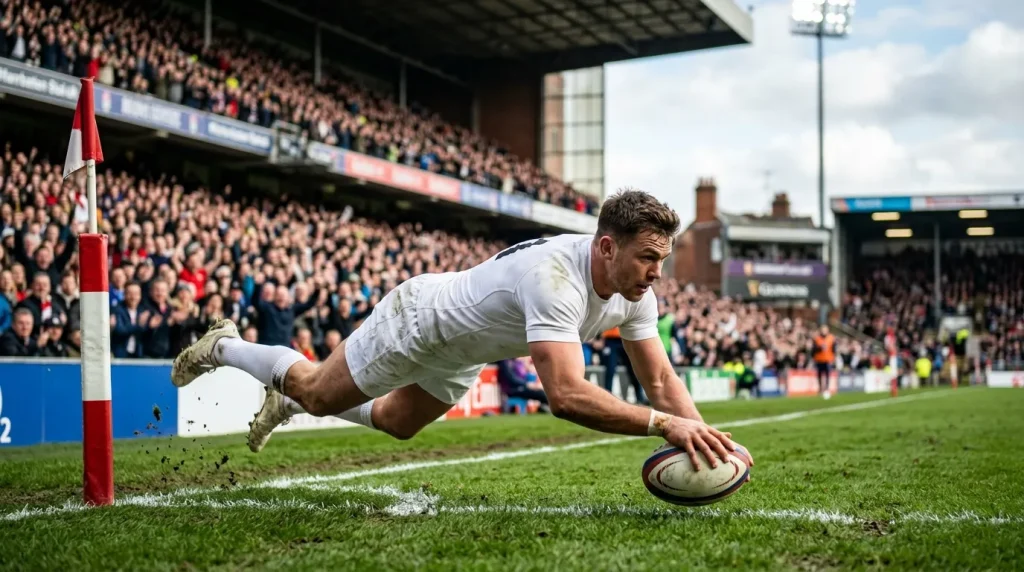
Why first try scorer is the headline novelty market
The first time a punter texts me before a Saturday match, the question is almost never about the win line. It is “who do you fancy for first try?” That is the market. It is the one with the shortest attention span and the longest pricing tail, the one that fits on a coupon next to a beer and a bag of crisps, and it is the one most punters get wrong in the same way every weekend.

First try scorer is rugby’s headline novelty market because it pays generously, settles fast and feels like skill even when it is largely chance. A clean win on a 14/1 wing in the opening eight minutes is the closest a rugby coupon gets to a horse-race finish. The numbers behind that headline are what makes the market interesting to me, and they are what I want to walk through here.
What inputs drive a first try scorer price
The trader who prices first try scorer is solving a different problem than the one who prices the handicap. The handicap line cares about the match outcome. First try scorer cares only about the next eighty minutes of attacking shape, the bounce of a ball, and which side scores first.
The first input is the probability the player’s team scores any try at all. Sounds obvious. It is the bit most punters skip. The Premiership in 2024-25 averaged 7.9 tries per match across 90 fixtures, so a typical Premiership game has roughly seven or eight try-scoring events to share between thirty-odd players who took the field. Champions Cup matches in 2024-25 produced 7.71 tries per game on average and saw Damian Penaud lead the bombardier list with 14 tries across the season. That tells you the top finishers in any competition concentrate try-scoring volume into a small group.
The second input is the player’s individual share of his team’s tries — a usage rate, in NBA terms. A flying wing on a side that runs the ball wide every set will collect a far higher share than a tighthead prop on a side that mauls. The third input is who else is on the pitch. The first try scorer market is competitive: every selection takes a share of the implied probability away from the others. If a side is missing two of its three regular finishers, the price on the third one shortens whether or not he has actually got better.

The fourth input, and the one that moves prices most before kickoff, is the goalkicker question and starting lineup confirmation. A “first to score” market exists separately, and prices on first try scorer are influenced by the assumption that the match opens with a try rather than a penalty. The more a side defends with discipline, the longer it takes for try-scoring to start, and the more the bookmaker has to think about whether the first three points come from the boot. Rugby Football Union income hit £228 million in 2024/25, a 30 per cent climb on the previous year and the second-highest figure in the union’s history, and at that level of investment in elite squads the early-match discipline is sharper than most punters give it credit for. Bill Sweeney, the RFU’s chief executive, called it “a year of progress amid challenges. We’ve made genuine advances on and off the field, yet we know parts of the game remain under real pressure,” and that pressure shows up at the top of fixtures in the form of cagey opening twenty minutes.
Positional bias — why wings and centres lead the boards
If you only ever looked at one stat to inform a first try scorer bet, look at where the player stands when the whistle goes.
Wings and outside centres lead try-scoring boards in almost every competition rugby has invented. The reasons are simple. Backs cover ground; forwards win it. Most rugby tries are scored after a phase of forward carries that creates space wide, then a back finishes the move. Wings hover at the end of the line because that is where the space opens. Outside centres get the ball with momentum into a tackle they can shrug or a gap they can attack. Fullbacks join the line and find seams. Scrum-halves snipe from the base when a forward has just dragged a defender out of position.
That positional bias is priced in. A starting wing on a strong attacking side will sit at 9/2 or 5/1 for first try scorer. A tighthead prop at the same team will be 25/1 or 33/1. The prices are not punishing the prop; they are accurately reflecting how often a prop is the player at the end of a phase rather than the middle of it. When forwards do score, it is usually from a maul or a pick-and-go, both of which tend to happen later in matches once defences are tiring and the attacking team has built sustained pressure.
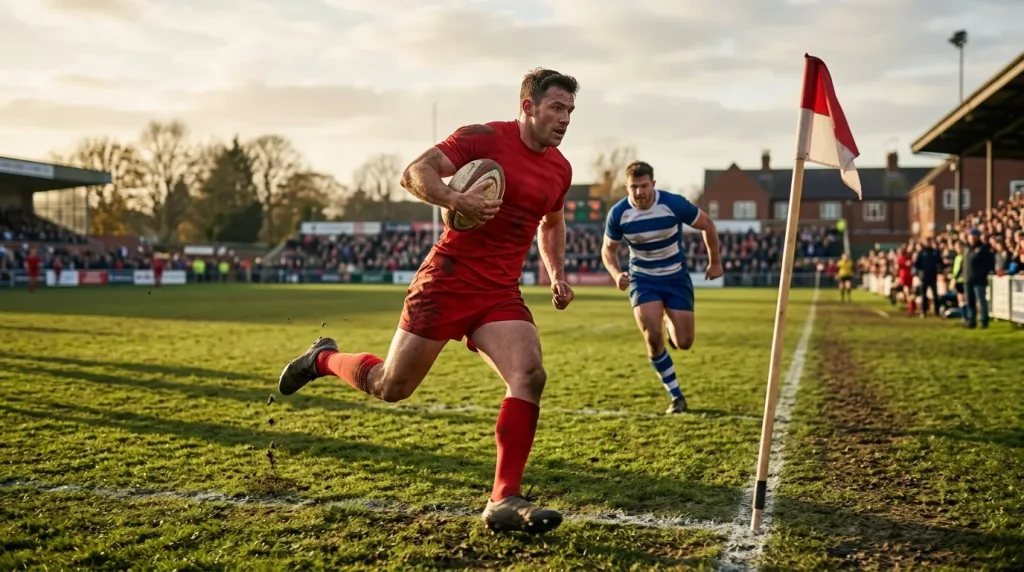
The interesting positions for finding value are the inside backs — the fly-half, the inside centre, the scrum-half. They score less often than wings but more often than props, and bookmakers tend to overprice them because punter attention defaults to wingers. A fly-half who runs the ball, a 12 who plays as a battering ram off short balls, a 9 who sniffs around the ruck — these are the names where you can find 10/1 on a player who is in the conversation more than the price suggests.
Anytime vs first try scorer — which gives better value
The honest answer is that anytime try scorer is the safer bet and first try scorer is the more interesting one, and the choice between them depends on what you are trying to do with your stake.
First try scorer pays the price you see. Anytime try scorer pays a shorter price, usually around a third of the first try scorer quote. A player at 6/1 for first try might be 7/4 to score at any point in the match. That ratio — roughly 1 to 3 — is consistent across most UK sites for most matches, and it gives you a quick mental check. If first try is 8/1 and anytime is 5/4, the market thinks the player’s overall scoring chance is decent but his chance of being first is no higher than a quarter of that.
Where anytime earns its keep is on backs who score regularly but not first. A fullback who tends to come into the line late in matches, an impact bench winger who only appears after sixty minutes — these players have meaningful anytime probability and almost zero first-try probability. Backing them at first try is a bet against the structure of the match. Backing them at anytime is a bet on their normal pattern.
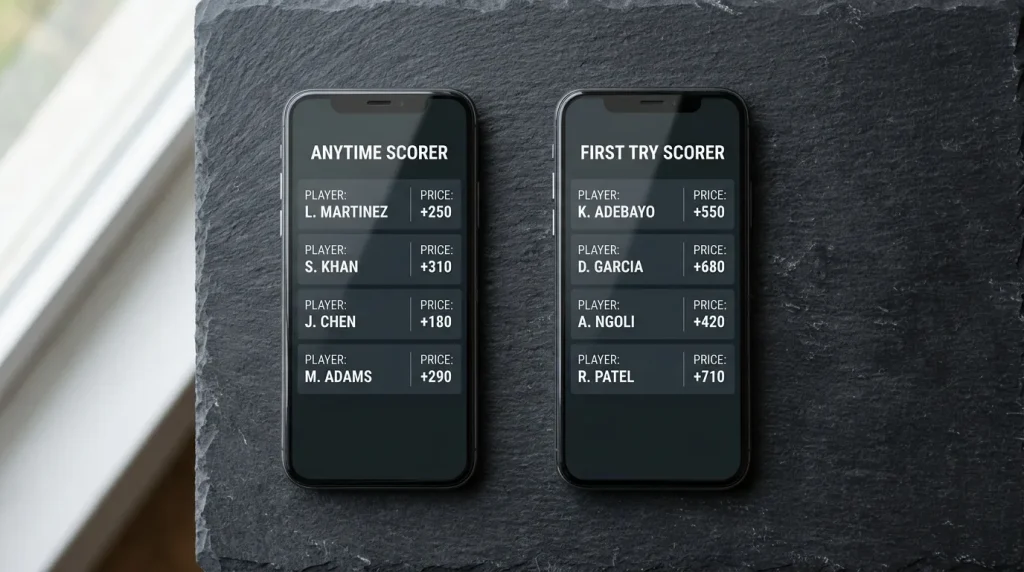
Where first try earns its keep is in two specific situations. The first is a clear opening play. If you know a side runs a set-piece move in the opening minute that puts the ball in a specific wing’s hands, that wing’s first-try price is the only one that captures the value. The second is a heavy mismatch where the favourite is expected to score in the first ten minutes. The whole first-try book on the favourite side is shorter than usual, but the named players hovering at 8/1 and 10/1 still represent better expected value than the same names at 5/4 anytime when the favourite is going to score three or four times anyway.
If you want to combine a first try scorer pick with a handicap or a total, you can stack the markets in a single match through a rugby bet builder, where correlated tries and totals turn into one settled slip.
Penalty tries, dead-ball spots and settlement quirks
Every first try scorer market has fine print, and rugby has more fine print than most sports because of the penalty try.
A penalty try in rugby union or rugby league is awarded by the referee when a defending team’s foul play denies a probable try. It does not credit a player. UK bookmakers settle the first try scorer market in two different ways and you need to know which one applies before you bet. The most common rule is that a penalty try counts as “no try scorer” for the first try scorer market, and all bets are settled as losers if a penalty try is the first try of the match. The alternative rule, used by a minority of UK sites, is to void the market and refund stakes if a penalty try opens the scoring. Read the rules tab before you stake on a fixture where one side has been giving away repeated goal-line penalties in recent matches.
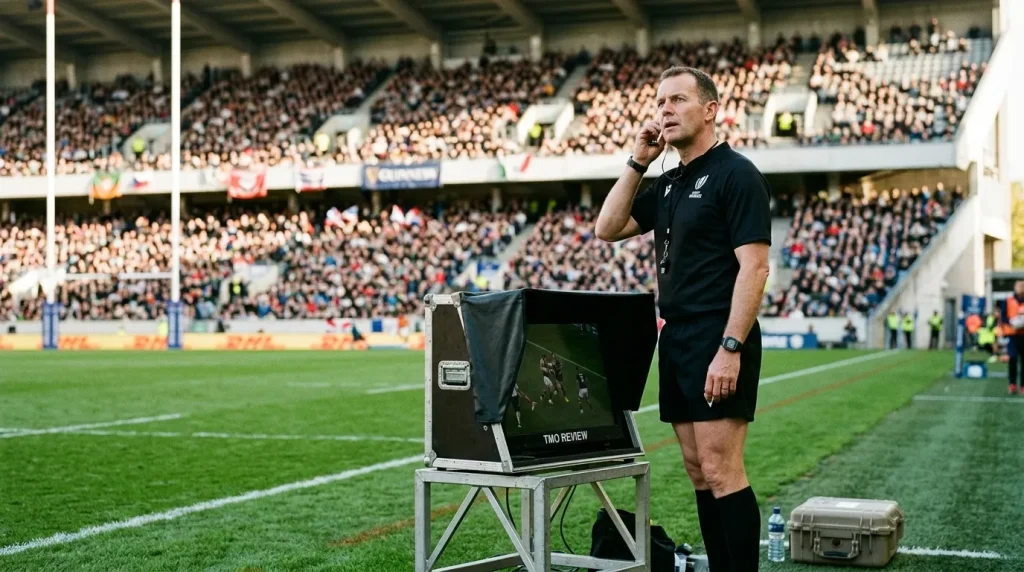
Dead-ball settlements are less common but worth knowing. If a player crosses the line and grounds the ball but a TMO review overturns the try, the original on-field decision does not stand. Whoever scores the eventual first try is the scoring player. That sounds obvious until you watch a TMO review take four minutes and another phase of play start before the decision lands.
Players coming off the bench can score the first try if no try has been scored before they come on. If the first try goes on the board in the fifth minute and your bench winger is introduced in the sixtieth, the market settled forty-five minutes before he ran out. Always read your slip back and confirm you are backing a starter when the price suggests you should be.
The first try scorer market closes with the first try. It does not stay open. Live first try scorer is a different market that resets across each unscored phase. Most UK sites do not run it deep into matches, and the few that do tend to suspend it whenever a maul forms inside the 22.
What the boards are telling you on Saturday
The first try scorer board is one of the most readable pieces of pricing on a rugby coupon if you treat it as a probability map rather than a list of names. The shape of the prices tells you which way the bookmaker thinks the match opens, which players the trader fancies, and where the soft prices sit on under-rated finishers.
Pick a single Premiership round, screenshot the first try scorer board for every match, and check it back on Sunday morning. Do that for four weekends and you will start to see the same patterns repeat — strong wings dominating the top of the board, props at 33/1 doing nothing, inside backs at 10/1 quietly turning over. That repetition is the edge.
How is a penalty try settled in the first try scorer market?
Most UK bookmakers treat a penalty try as "no try scorer" for the first try scorer market, meaning all bets settle as losers if a penalty try opens the scoring. A minority of sites void the market and refund stakes instead. Always check the rugby rules tab on your chosen site before staking on fixtures with disciplinary risk.
Is anytime try scorer better value than first?
Anytime usually pays around a third of the first try scorer price for the same player, so the choice depends on the player"s pattern. Wings who run the ball early are good first-try picks. Late-impact players, fullbacks and bench wingers are better anytime picks because they often score late rather than first.
Why are forwards usually long prices in this market?
Forwards score most of their tries from mauls and pick-and-goes, which tend to occur later in matches once defences are tired. The first try of a match is more often a back-line score after a sweeping move. Bookmakers price props and locks at 25/1 to 33/1 because the structural odds of a forward being first to cross are genuinely small.
Articles
Written by the editors at Rugby Betting Sites.
