
In-Play Rugby Betting Markets — Where Liquidity Moves Live
 Available in US
Why in-play rugby is faster than it looks
People who do not bet rugby live tend to assume it is slower than football. They watch a scrum reset and a TMO review and conclude that the market must be sleepy. They are wrong, and the bookmakers I know quietly love them. In-play rugby moves in jolts — long stretches of glacial price drift broken by sudden, violent reprices when a try is scored, a card is shown or the conditions change. The trick to making the market work for you is to know when those jolts will come and which markets they will hit hardest.
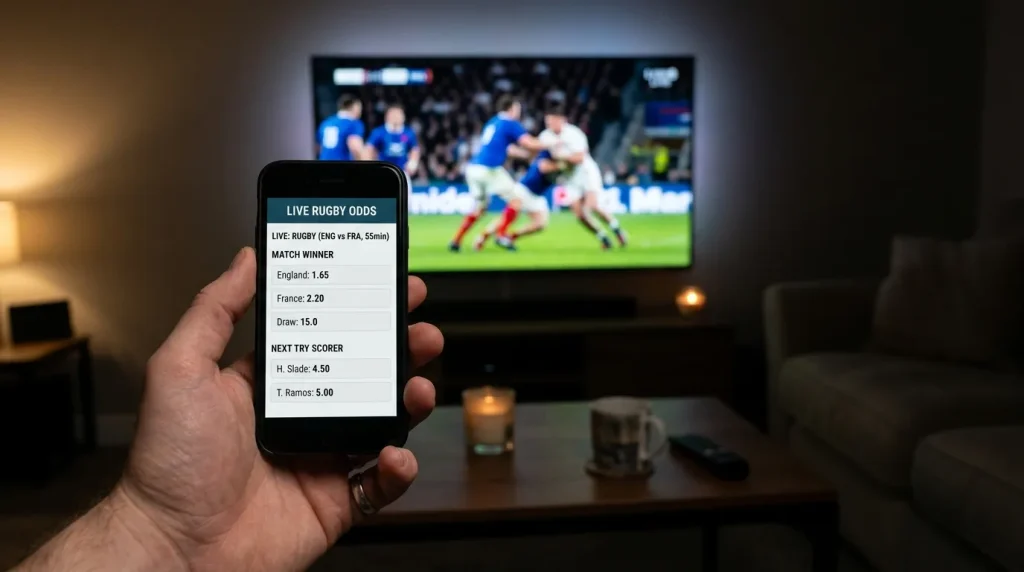
Around 10 per cent of British adults now place bets on sport online, and live betting is a growing slice of that activity. The technology that runs in-play has improved enormously in three years. The hard part is no longer accessing the markets. The hard part is reading them faster than they reprice.
Markets that run live and ones that suspend often
Not every pre-match market continues to trade once the whistle has gone. UK sites typically run a smaller live menu than their pre-match coupon, and the markets you can actually access during play vary by fixture.
The reliable in-play markets across UK sites are match result, handicap, total points, next try scorer, race-to-points (which team reaches 10, 15 or 20 points first), and team-to-score-next-try. These run for most of the match and reprice constantly. The team-totals stay open through both halves, the half-time markets run until the whistle of the relevant half, and the half-with-most-points market trades through most of the second half but suspends frequently in the closing minutes.
The markets that suspend often are first try scorer, which closes after the first try and does not reopen; bonus-point markets, which suspend whenever a side approaches the four-try threshold; and player-prop markets, which suspend whenever the player in question is on the move toward the line. A bookmaker is not going to leave a try-scorer market live while a wing is sprinting clear of cover. They will suspend, watch the try go in or not, and then reprice the related markets a few seconds later.

The other class of suspensions is for video reviews. Any TMO referral suspends affected markets until the on-field decision lands. A reset scrum suspends them. A long injury delay suspends them. Live rugby betting is, in some ways, a market that pauses constantly. The skill is recognising which markets will reopen with bigger reprices than the play justifies.
How a live price moves with each phase of play
Take a Six Nations fixture, fifteen minutes in, both sides level at 3-3. The pre-match favourite was 4/9. After fifteen minutes with no try and the underdog defending well, the price might have drifted to 1/2 or even 4/7. That is not a big move; it reflects the modest information of fifteen minutes of even play.
Now the favourite scores in the eighteenth minute. The conversion goes over. They lead 10-3. The price on the favourite shortens immediately to perhaps 2/7 or 1/3. The handicap moves a point or two, the total stays roughly where it was (one try is not a surprising amount of scoring for fifteen minutes), and the next-try market reprices to make the favourite a stronger favourite to score next.
Each phase of play after that produces a smaller move, unless it is another try or a card. The handicap line drifts a few hundredths of a point with every successful kick at goal that does not have a direct impact on the margin. The total trends upward or downward as time elapses against the line. The market is constantly forecasting the rest of the match given what has happened so far, and it does it with surprising fidelity.
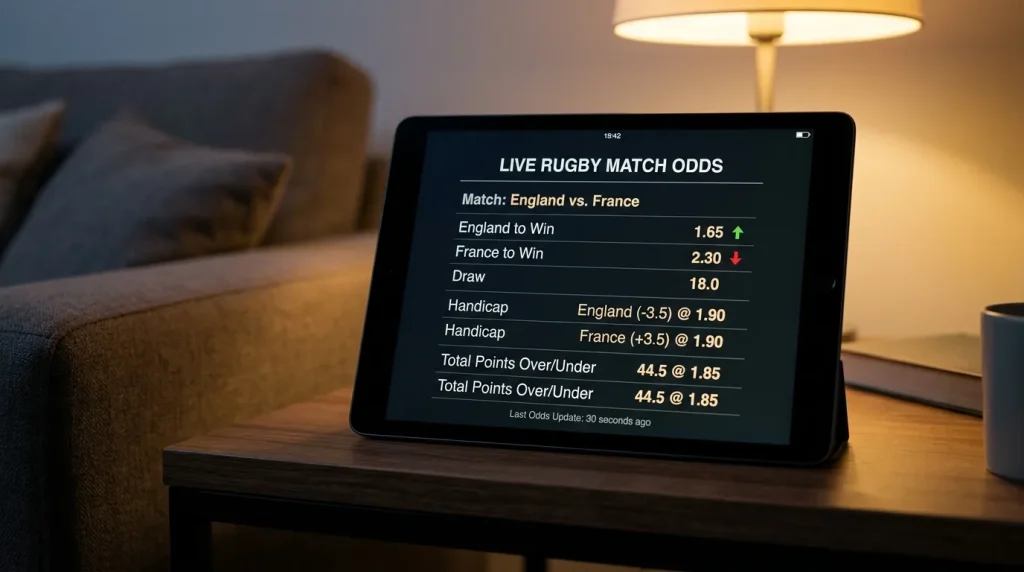
The disruption events — tries, cards, TMO reversals — are where the price moves you can read. The grind events — three lineouts in a row, a five-minute scrum reset, the second half opening with no points — are where the price drifts at a rate that punishes you for being early. If you are going to live bet rugby, bet around the disruption events, not in the dead air.
Cards, scrum resets and market suspensions
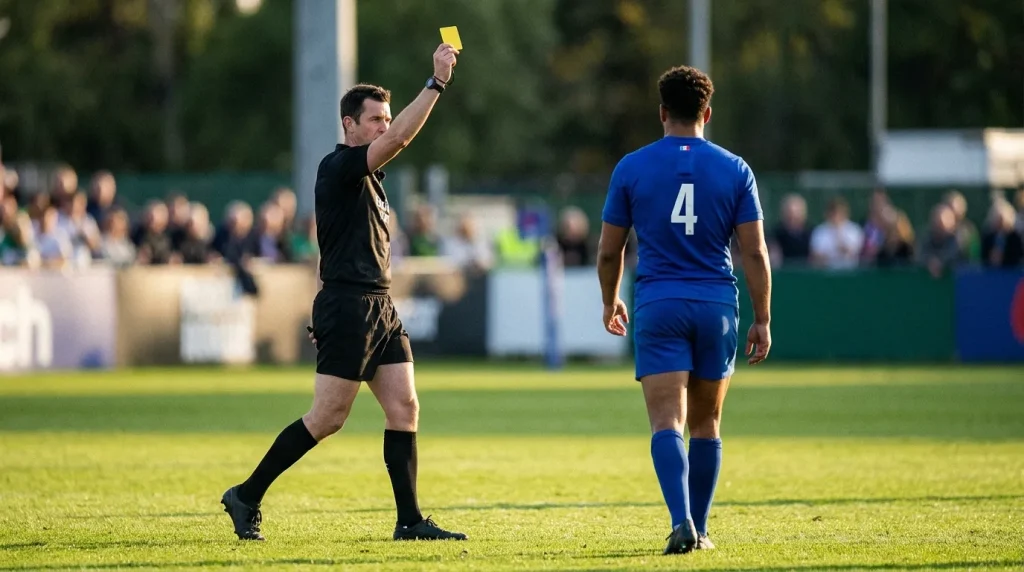
A yellow card in rugby is a ten-minute suspension. A red card is a permanent reduction to fourteen players, with one player available to return after twenty minutes in some competitions (the “20-minute red”) and no return in others. UK sites handle these events differently and you need to know which version of the rule applies.
The market suspends as soon as the referee reaches for a card. It usually stays suspended for thirty to ninety seconds while the trader checks the timing rules, the player position and the competition’s specific red-card protocol. When the market reopens, the new prices reflect the impact of fourteen versus fifteen for the relevant duration.
The impact of a card depends on whom it goes to and when. A yellow to the favourite’s loose forward in the seventieth minute moves prices less than a red to the favourite’s tighthead in the fifteenth. The trader’s model accounts for the time remaining, the relative strengths and the typical points conceded per minute of imbalance. The reprice you see when the market reopens is roughly the trader’s best estimate of those factors, baked into a new line.
What I have learned over years of watching live rugby markets is that the immediate reprice after a card is often too aggressive. The market moves on the assumption that the imbalance will be punished, and within a few minutes it tends to soften as the side a man up fails to convert their advantage. If you are quick to back the side that took the card right after the reprice settles, you sometimes catch a price longer than the eventual settled odds. This is not free money. It is one of the few legitimate live-rugby edges available to a patient bettor.
Scrum resets and TMO reviews suspend markets without changing the underlying state. When markets reopen, the price is usually the same it was before the suspension, occasionally with small reprices reflecting the field position the play has reached.
Live betting tools UK sites typically offer
UK sites have invested heavily in live tools over the past few years, and the standard kit now includes more than just live prices. The basics worth having are real-time score and time on the betslip page, push notifications for tries and cards if you have the app, and visible market-suspension messages that tell you when a market will reopen rather than leaving you guessing.
Live streaming is the headline feature. Most UK sites stream Premiership and Six Nations matches, with smaller fixtures offered selectively. The stream usually requires a funded account or a bet placed within the past 24 hours. The quality varies by site and by fixture; broadcaster rights restrict what can be shown and where, so the same match might be streamable on one UKGC site and unavailable on another.
Live bet builder, where you can stack legs during the match, is the most engaging feature for many punters and is now standard at most major sites. Live cash-out, where you can take a payout at the current implied value of your settled-position, is also standard. The cash-out figure is not generous — the book takes a cut on every cash-out — but it is a useful tool if you need to manage a position before a known disruption like a card-driven risk window.
Statistics overlays vary widely. The best sites show possession share, territory percentage, scrum and lineout success rates, and per-player metrics. The weakest sites show only the score and the time. If you bet rugby live with any regularity, the stats overlay matters more than the streaming quality, because the stats tell you whether the side trailing on the scoreboard is actually winning the underlying contest.
The one tool I would always check before staking on a live rugby market is the suspension policy. Some sites publish how long they typically take to reopen after a TMO; some do not. A site that consistently reopens its rugby markets thirty seconds after a TMO concludes is operationally tighter than one that takes two minutes, and that tightness matters when you are trying to bet around disruption events.

Once you have a feel for live rugby, the next step is understanding when to take the implied profit on a winning position rather than letting it run to the final whistle, which is where cash out in rugby betting picks up the story.
What live rugby teaches you about the pre-match book
The most useful side-effect of betting rugby live for a season is that your pre-match reading gets sharper. You start to notice which pre-match lines move heavily in the first quarter (because the trader was uncertain) and which barely move at all (because the trader was confident). You learn which teams play well to a fast pre-match price and which crumble against it. You see how often pre-match favourites stumble in the first ten minutes only to recover by half-time.
Live rugby is not just a separate product. It is a feedback loop on your pre-match reading. Spend a season betting live, even at small stakes, and your pre-match coupons start to look different the next year.

How long does a market stay suspended after a red card in rugby?
Most UK sites reopen markets within sixty to ninety seconds of the card being shown, once the trader has confirmed the player, the timing rules and any 20-minute red protocols. Complex disciplinary reviews can extend the suspension to two or three minutes. The match itself usually restarts before the markets do.
Can I live-bet bonus points during the Six Nations?
Yes, but the bonus-point markets suspend whenever a side approaches the four-try threshold and during any scoring play that might cross it. Live bonus-point bets generally close once a side has reached three tries unless the in-running gap is large enough to make a fourth try unlikely. The Six Nations also features a bonus league point for winning, which is a separate market.
Is live streaming required for in-play rugby betting in the UK?
No. You can bet in-play without watching a stream, although doing so blind is rarely sensible. Most UK sites offer streams for Premiership and Six Nations fixtures to funded accounts. Where a stream is not available, the live stats overlay and the score-and-clock display are the alternative inputs for in-play decisions.
Articles
Written by the editors at Rugby Betting Sites.
