
Financial Vulnerability Checks and What to Expect
 Available in US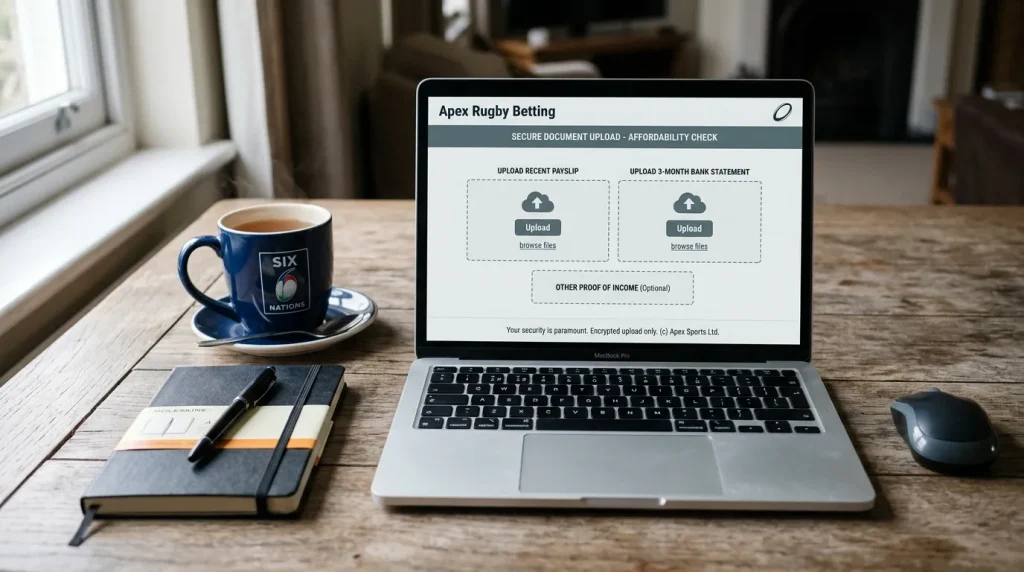
The email that asked me for a payslip
I had been steadily increasing stakes through the autumn internationals one year — same proportion of bankroll, just a bigger bankroll — and got the email on a Tuesday morning. The operator wanted recent payslips, a bank statement, and a brief explanation of the source of my funds. My first reaction was irritation. My second, after I thought about it for ten minutes, was that they were doing their job and the irritation was misplaced.
Financial vulnerability checks are the most controversial part of the UK regulated framework, and almost everyone has an opinion shaped by anecdote rather than the actual rules. What follows is what I have learned from going through several of them over nine years, watching how operators implement them differently, and reading the regulatory guidance underneath. The system is genuinely imperfect, but the principle behind it is sound, and knowing what to expect makes the experience much less unpleasant.

Why the checks exist
The UK regulated gambling industry handled £15.6 billion in gross gambling yield in 2024. A significant minority of that money came from customers betting more than they could realistically afford. As the Commission’s chief executive observed, “The Commission has been working to ensure that the industry is well regulated and that consumers are protected.” The vulnerability check regime is the mechanism translating that statement into operational behaviour.
The principle is that operators have a duty of care towards customers whose betting patterns suggest possible harm. Identifying those customers requires some level of insight into financial circumstances — not because betting is dangerous in itself, but because the difference between recreational and harmful betting is largely a matter of whether the stakes are affordable. Operators that simply took deposits without ever questioning whether the customer could afford to lose were, the regulator concluded, contributing to harm at scale.

What triggers a check
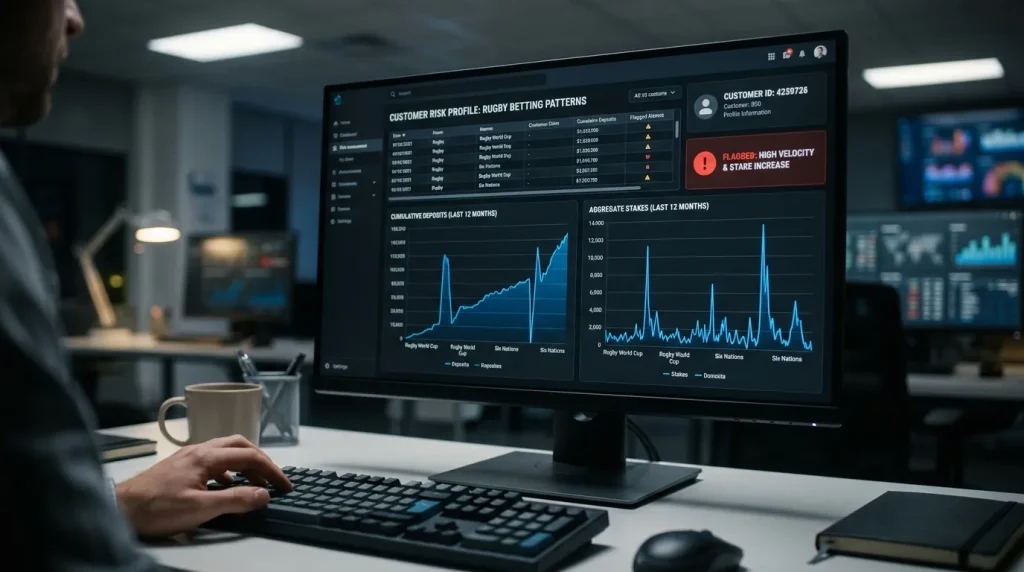
Triggers are operator-specific and largely undisclosed, but the broad pattern is consistent. Sudden increases in deposit or stake levels. High cumulative losses over a short period. Deposit frequency that suggests financial pressure — many small top-ups in quick succession. Demographic indicators that algorithms flag as elevated risk. Markers from open-banking data if the customer has enabled it. Combinations of these factors weighted by the operator’s internal risk model.
Most casual bettors will never be flagged. The checks are not random and they are not punitive — they are targeted at patterns the operator has reason to think may indicate harm. If your activity sits well within normal recreational patterns, you are unlikely to be asked for anything. If your deposit-to-stake ratio shifts noticeably or your activity rises sharply, an enquiry becomes more likely.
The documents operators typically request
The standard requests are recent payslips, three months of bank statements, evidence of other income sources where relevant, and sometimes a written explanation of the source of funds. Some operators ask for less initially and escalate if the response is unsatisfactory. Others ask for a fuller pack upfront. The variation is partly about operator risk appetite and partly about the customer’s risk profile within their system.
Bank statements are the most contentious request. They reveal far more than betting affordability — rent, salary, spending patterns, savings balances. From the customer side this can feel intrusive. From the operator side it is the most efficient way to assess actual financial capacity, and partial information often results in a worse outcome than full disclosure. The choice is essentially whether to engage substantively or accept restrictions on the account.
What happens if you do not respond
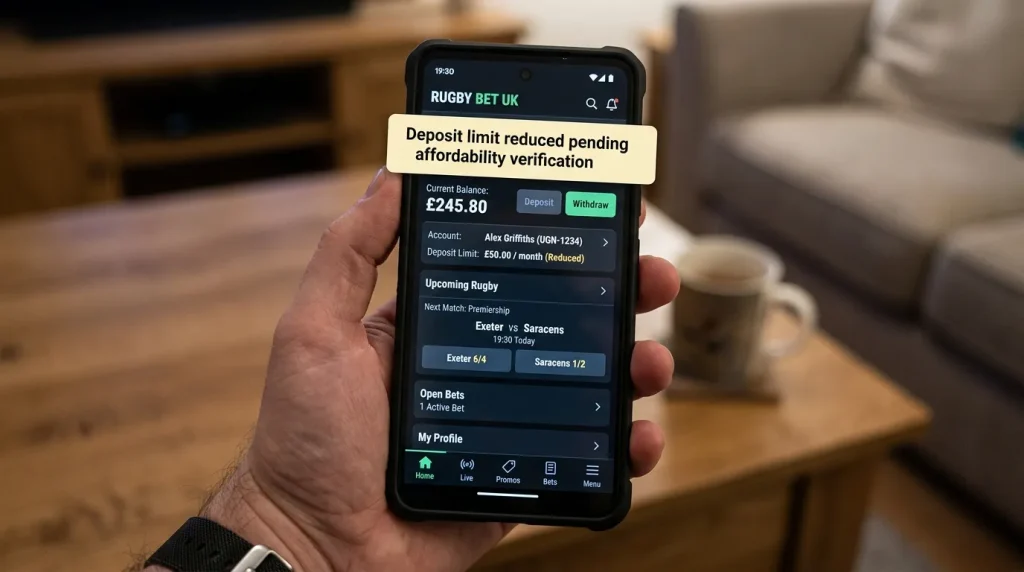
If you ignore the request or refuse to provide documentation, the standard response is that the operator restricts the account. Deposit limits drop to low levels, or deposits are blocked entirely, while existing balances remain available for withdrawal. In some cases the account is closed entirely with funds returned. The operator cannot legally continue accepting unrestricted custom from someone they have flagged as potentially vulnerable without satisfying themselves about affordability.
The decision to not respond is therefore a decision to lose access to that operator. For someone with significant balance or pending withdrawals, this can be genuinely awkward. The smoother path, even if you find the request annoying, is usually to provide what is asked, get cleared, and move on. The friction is worst when you try to negotiate around the check rather than through it.
Stakes and the proportionality test
The regulator’s framing is that checks should be proportionate to the actual stakes involved. A customer betting £20 a week should not face the same scrutiny as someone wagering £20,000. Operators are supposed to calibrate their interventions accordingly, with lighter touch for lower-risk activity and fuller checks reserved for genuine concern.
In practice, calibration varies. Some operators are notably lighter-touch than others, particularly at modest stake levels. Others apply checks at thresholds that surprise customers used to less rigorous environments. The proportionality principle is in the guidance, but the implementation depends on individual operator risk appetite, which is one reason customers experience the same activity differently across different platforms. The licensed framework that enforces the basic standards sets the floor, not the ceiling.

The single customer view debate
One of the live policy questions is whether checks should be operator-specific or industry-wide. At present a customer can be flagged at one operator while remaining unflagged at others. A persistent customer who spreads activity across multiple licensees can in principle avoid the threshold any single operator uses, even if their total betting activity is concerning.
Proposals for a “single customer view” — a shared data system across operators — have been debated for years. Privacy concerns have slowed implementation, as has industry resistance to the operational costs. The current state is that checks remain operator-specific, but data-sharing arrangements through Trade Reporting Schemes capture some of the worst patterns. The system is moving towards more integration, slowly.
What good operator behaviour looks like
The better operators handle vulnerability checks with care. The communication is clear, the request is proportionate to the activity, the timeframe is reasonable, and the response from the customer is processed quickly. Funds remain accessible throughout, only deposit behaviour is restricted. Once documentation is satisfactory, account function returns to normal without lingering restrictions.
The worse operators conduct checks in ways that feel punitive — sweeping requests at thin justification, slow processing, ambiguous decision-making, restrictions that persist even after compliance. The Commission has fined several major operators in recent years for both under-enforcement and over-enforcement, which gives some sense of where the regulatory line sits. The quality of vulnerability check handling is a reasonable proxy for the overall maturity of an operator’s customer operations.
From the customer’s side
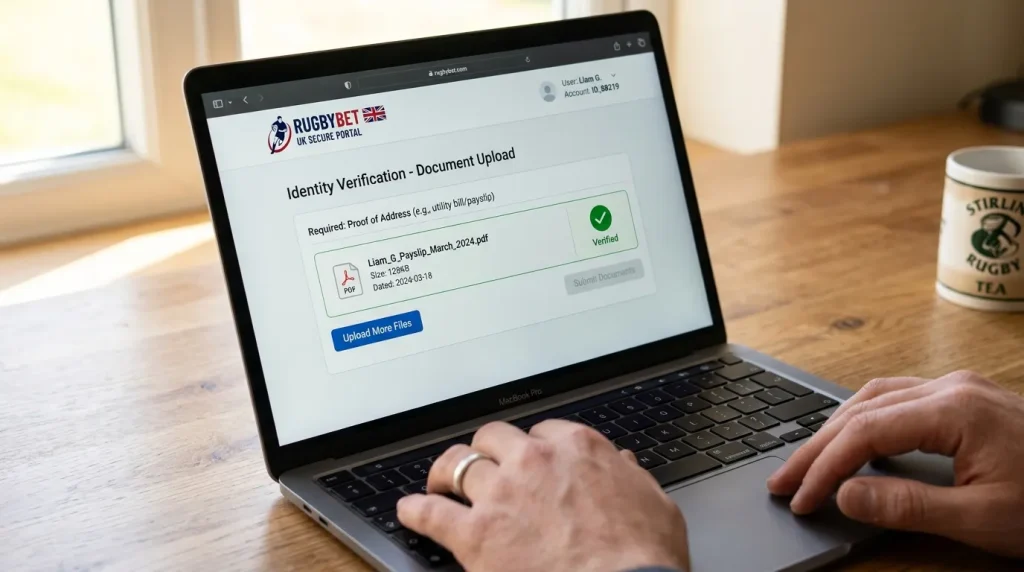
If you are flagged, the practical advice is to read the request carefully, gather what is asked, send it through the secure portal the operator provides, and respond within the timeframe stated. Do not send sensitive documentation by email, do not send originals, and do not provide more than what is asked. Most operators redact or summarise the information after review and do not retain raw bank statements indefinitely.
The temptation to argue with the check is rarely productive. The customer support agents do not set the policy, the policy is set by the regulator and by internal risk teams, and the framework gives the operator broad discretion. Engaging substantively almost always resolves faster than disputing the principle. If the outcome is genuinely unreasonable, the route is the operator’s complaints procedure followed by the ADR — not arguing with the front-line agent who delivered the request.
The wider policy debate
The financial vulnerability framework is genuinely controversial. Industry argues that intrusive checks drive customers offshore to unregulated markets, which removes them from protection entirely. Consumer advocates argue that the checks are necessary to prevent harm and that the offshore concern is overstated. Affordability thresholds proposed in recent White Papers have been debated extensively without final resolution.
From a customer perspective, the debate matters less than the current operational reality. Whatever the long-term policy settles into, the existing framework is what you actually deal with. Treating it as a fact of the regulated environment rather than something to fight against generally makes the experience less stressful. The trade-off — slightly more friction in exchange for a market that is meaningfully safer for the typical user — is the deal on offer.
Living comfortably inside the regime
The way to make vulnerability checks a non-event is to bet at stakes you can transparently demonstrate to be affordable, to use the operator’s own limit-setting tools to formalise that affordability, and to keep your betting volume consistent with your stated profile. The operators who flag heavily are not flagging people who look financially stable and are betting within obvious means. They are flagging people whose activity patterns suggest the activity may be running ahead of the capacity.
I have not had a vulnerability check trigger in the last four years, despite continuing to bet at meaningful stakes. The change from earlier in my career was not a change in stake size but a change in pattern — consistent monthly volume, predictable deposit cadence, declared and stable income, sensible loss limits actively in place. The checks are not designed to catch people who look like that. They are designed to catch people whose patterns look like something is going wrong. Being the first kind of customer rather than the second is largely within your own control, and the framework rewards consistency in ways that benefit everyone.
What is a financial vulnerability check in UK betting?
A formal request from a UKGC licensed operator for evidence of affordability — typically payslips, bank statements or other income documentation — when betting patterns suggest possible risk of harm. The operator uses the information to assess whether continued activity at the current level is sustainable for the customer.
What triggers an affordability check?
Triggers are operator-specific but typically include sudden increases in deposit or stake levels, high cumulative losses over short periods, high-frequency small deposits, and algorithmic risk flags. Casual bettors well within normal recreational patterns are unlikely to be asked.
What happens if I refuse to provide documentation?
The operator will restrict your account — usually low deposit caps or blocked deposits, with existing balance accessible for withdrawal — and in some cases close the account entirely while returning funds. The operator cannot legally continue unrestricted service to a flagged customer without satisfying themselves about affordability.
Articles
Published by the Rugby Betting Sites team.
