
European Champions Cup Betting — Pools, Knockouts and Value Windows
 Available in US
The bet that taught me the Champions Cup is not the Premiership
I had backed an English side at 4/5 for a pool-stage Champions Cup fixture against a mid-table French opponent, reasoning from form lines that suggested a comfortable win. The English team had been excellent in domestic rugby that month. The French side lost cleanly. The English team went down by twenty. I had treated a European fixture as if it were a Premiership match with a different shirt at the other end, and the Champions Cup had reminded me, expensively, that it is its own competition.
The European Champions Cup is the most stylistically varied of any major rugby competition. Teams from four leagues, four national rugby cultures, and wildly different travel and rest contexts collide in a knockout-shaped format that rewards specific competition knowledge. Most of the value in Champions Cup betting lives in places where casual punters apply domestic instincts and get punished. This article is the framework I have built for actually reading the tournament.
The competition shape
The Champions Cup pools 24 teams drawn from the Premiership, the Top 14, the URC and the Italian league across two pool stages followed by a knockout phase running through the round of 16, quarter-finals, semi-finals and a final. The 2024-25 edition featured 63 matches across the full competition with 7.71 tries per match on average, and Damian Penaud finished as top try-scorer with 14 across the campaign.

The pool-stage format compresses a competition’s worth of result variance into a small number of fixtures. Each team plays four pool matches across two windows, and qualification for the knockouts depends on points won, bonus-point try counts and head-to-head outcomes. The compression means individual pool fixtures matter more than equivalent regular-season league matches, and the lines should reflect that — though sometimes they don’t, particularly on fixtures involving teams whose pool position is already settled.
The stylistic clash that drives upsets
Premiership rugby, Top 14 rugby and URC rugby are three genuinely different styles. The Premiership emphasises set-piece work, contested breakdowns and territorial kicking. The Top 14 is more variable but trends towards physical confrontation, set-piece dominance and counter-attacking ambition. URC rugby spans a wide range from the open Irish provincial style to the structured South African approach.
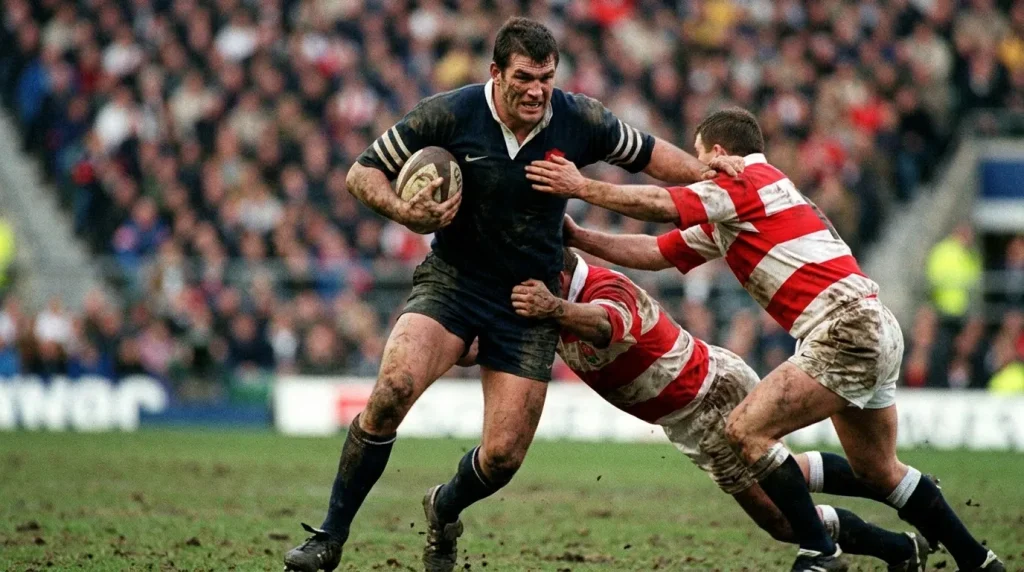
When teams from different traditions meet in pool matches, the stylistic match-up matters as much as the form lines. An English side that dominates the Premiership through set-piece grind may find that approach less effective against a French side that meets force with greater force at scrum-time. A skills-based Irish side may struggle in wet conditions against a Top 14 team built for physical attrition. Reading the stylistic question is part of reading the fixture, and form-based analysis alone misses it consistently.
Home advantage and the travel question
Home advantage in the Champions Cup is genuinely large, and it varies by route. A Premiership side hosting a French side travelling on Friday for a Saturday afternoon kick-off has a real edge — preparation time, familiarity with conditions, energy levels all favour the home team. A French side hosting an Irish or English visitor at a fortress venue like Toulouse or Bordeaux compounds the home advantage with a difficult travel context for the visitor.

The lines usually account for home advantage, but the size of the adjustment varies meaningfully across operators. Comparing handicap lines on Champions Cup pool matches across three or four books often reveals one operator pricing home advantage two points wider than another, and the gap is the value opportunity if your own view of the home edge sits between the two. The wider the geographical gap between the two teams, the more this matters — South African URC sides hosting European opponents face an extreme version of the same dynamic.
Reading squad rotation across the pool stage
The pool stage compresses across two windows, and squad rotation between domestic rugby and Champions Cup rugby is significant for most contending teams. A side genuinely chasing European qualification will field full-strength squads in pool fixtures. A side already eliminated, or already qualified with seeding settled, will rotate heavily into the final pool round.

Reading where each team sits within the pool table is therefore central to reading individual fixtures. Round one is straightforward — full squads on both sides. Round four can be radically different, with motivated teams chasing qualification against rotated opponents who have nothing meaningful to play for. The handicap and totals lines in round four often look unusual precisely because the personnel are unusual, and the bettors who price those fixtures with the table context in mind tend to find more edges than those who price them on form alone.
The knockout uplift
Once the competition enters knockouts, the variables tighten. Both teams are at full strength. Both have motivation. The lines reflect a competition where the better team usually wins, with home advantage in the round of 16 and quarter-finals carrying the higher-seeded team’s territorial benefit. The drama lives at the semi-final and final stages, where seeding effects are still present but reduced and the matches are often played at neutral or quasi-neutral venues.

The 2024-25 Champions Cup final drew 70,225 spectators at Cardiff’s Principality Stadium across the cumulative 1,142,553 fans who attended the competition’s 63 matches, and the final-day intensity is genuinely unlike anything else in club rugby. Lines on finals are sharp because the markets see them as marquee events with significant volume. The value windows in knockout fixtures are smaller than in pool stages, but they exist when the stylistic match-up favours the underdog or when one side has been more taxed by their semi-final than the other.
Top try-scorer markets across the competition
The top try-scorer outright is a market with structural patterns worth understanding. The winner tends to come from one of three profiles — a winger or fullback on one of the high-scoring teams (who will play more matches and get more attacking opportunities), a centre or back-three player who is the principal finisher on a deep-running side, or occasionally a back-rower on a team that dominates close-range attacking situations.

The 14-try total Penaud put together across 2024-25 is in line with the historical winning numbers — top try-scorers tend to land in the 10 to 15 range across the full competition, which is achievable for a player on a deep-running team but unrealistic for a player on a side likely to exit at the quarter-final stage. Backing top try-scorer needs both the player profile and the team’s competition path. The same logic informs analysis of RFU Championship season-long markets, where the structural and travel patterns differ but the underlying outright try-scorer logic transfers.
Pool-stage bonus points and the qualification maths
Bonus points significantly shape competition strategy. Four tries scored produces a bonus point regardless of result. Losing by seven or fewer also produces a bonus point. These margins matter for qualification — a team that wins three pool matches but takes no bonus points may finish below a team that wins two and bonus-points all four.
The implication for in-match betting is that team behaviour in the final ten minutes of pool matches can be unusual. A team chasing a fourth try will keep ball in hand longer than tactically optimal. A team losing by eight or nine will play for territory and a losing bonus point rather than the win. These late-match dynamics affect totals lines, handicap covers and bet builder selections in ways that are not immediately obvious from form analysis. Watching the pool table during a match — knowing where bonus point margins sit — is a different exercise from watching the scoreline alone.
Bracket reading for the knockout phase
Once the round of 16 is set, the bracket structure tells you something about each side’s path. The seedings are based on pool-stage performance, with higher seeds drawing lower-seeded opponents in the round of 16 and hosting through to the semi-finals (with the final at a pre-announced neutral venue). Reading the bracket lets you identify which contenders face genuinely tough routes and which face softer ones.
The outright price on a fancied side should factor in the route as well as the team. A second-seed with three difficult fixtures between them and the final is worse value than a third-seed with a softer bracket. Bookmakers usually price the outright with the bracket in mind, but the granularity varies — some lines respond more sharply to bracket dynamics than others, and the gap is where the work pays off.
The European vs domestic priority question
Different teams treat the Champions Cup with different priority relative to their domestic league. Top French sides historically rotate more heavily to protect their Top 14 campaigns. English sides have shifted patterns over the years depending on Premiership context. Irish sides through the Leinster era have prioritised both, using their squad depth to compete genuinely on both fronts.
The implication is that historical Champions Cup form is filtered through the priority each side gave the competition that season. A team that won the Top 14 while making the Champions Cup quarter-finals expressed real priority allocation that affects how you read their current campaign. Reading the priority correctly affects everything from outright betting to specific fixture handicap assessment, and the bettors who get this right have an edge over the ones who treat Champions Cup form as flat across all entrants.
What I look for in the next campaign
Going into a new Champions Cup season, I want to see three things before I commit to outright positions. First, the pool draw — which contenders are bracketed together and which have softer routes. Second, the early-season form indicators in domestic rugby — which sides are actually playing well, with full availability, going into the first pool window. Third, the squad management signals — which coaches are talking about rotation, which are talking about full commitment, and which have settled match-day 23s emerging.
The Champions Cup remains one of the most rewarding competitions to study because the prep work pays off. Casual punters bet outrights based on brand familiarity. Slightly more engaged ones bet based on bracket and recent form. The bettors who do consistently well combine those factors with stylistic analysis, priority reading and squad management awareness — and the gap between the casual prices and the actual probability is wider here than in almost any other rugby market available.
How much does home advantage matter in the Champions Cup?
Significantly, particularly when the travel context is unfavourable for the visitor. The lines usually account for home advantage but the size varies across operators, and the value opportunity lives in fixtures where one book is pricing the home edge more conservatively than another. Long-haul fixtures involving South African URC sides amplify the dynamic.
Are pool-stage Champions Cup matches priced as sharply as knockouts?
Generally less sharply, because round-four pool matches in particular involve heavy rotation by teams whose qualification position is settled, and operator lines lag the personnel reality. Knockouts attract more volume and sharper pricing, but pool-stage rotation windows are recurring value opportunities.
What does a top try-scorer winner usually score across the competition?
Recent winners have landed in the 10 to 15 try range across the full campaign. Damian Penaud"s 14 tries in 2024-25 sits at the top of that band. Backing the market requires a player on a deep-running team with both finishing volume and a likely route to the semi-finals or final.
Articles
Written by the editors at Rugby Betting Sites.
