
Live Streaming Rugby on Betting Sites — Coverage and Practicalities
 Available in US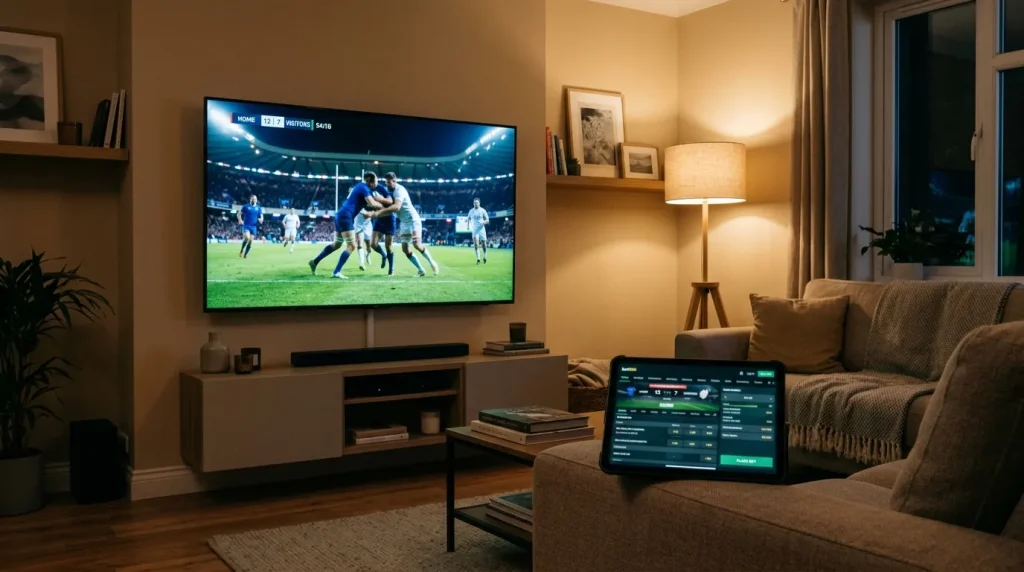
The fixture I almost missed because the broadcast was on the wrong channel
An autumn international a few years back was tucked away on a subscription channel I did not have. I had a bet riding on the match and assumed I would track it through live score updates. Halfway through the first half I remembered my betting account offered a stream. Two minutes later I was watching the game inside the betting app, with the live odds beside the picture, and the experience was meaningfully better than refreshing a score widget. I have used bookmaker streams as my default rugby viewing for matches outside mainstream broadcast ever since.
Live streaming on UK betting sites is one of the genuinely useful features the regulated market has matured around. The picture quality is adequate, the synchronisation with the markets is usually tight, and the coverage extends to fixtures that would otherwise be hard to follow in real time. The 25 percent improvement in user engagement that the industry has seen since live streaming and real-time odds became standard reflects how central these features have become to the actual betting experience.
What the streaming product actually is
Bookmaker live streams are not broadcast television. They are commercial deals between operators and rights holders that allow the operator to redistribute the match feed to its account holders. The picture is generally derived from the standard broadcast feed but stripped of commentary in some cases, with the betting interface overlaid alongside or below the picture.
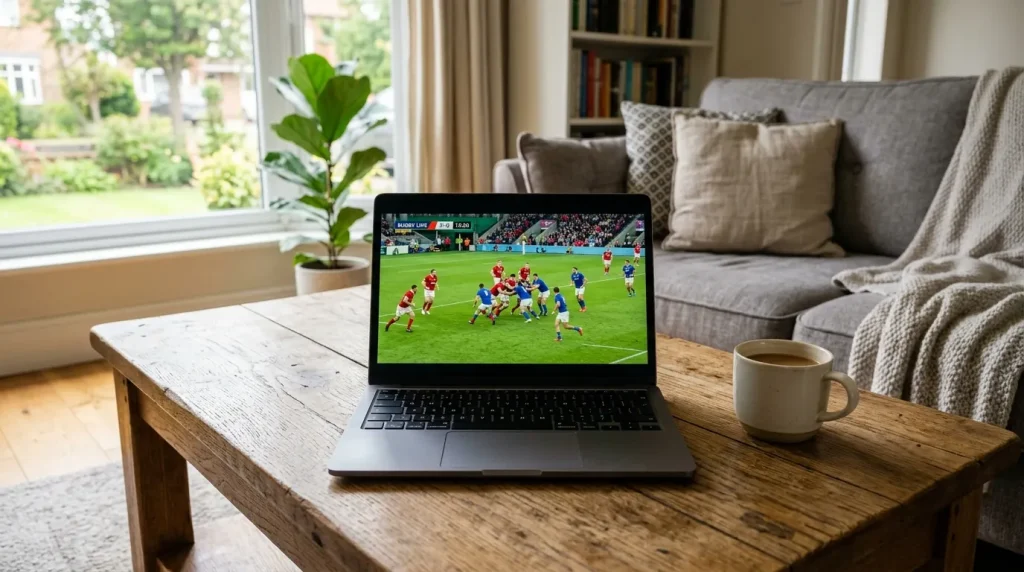
The picture quality is usually 720p or thereabouts — adequate on a phone or tablet, watchable on a laptop, slightly underwhelming if you cast to a larger TV. The audio is variable; some streams carry the broadcast commentary, others run silent or with ambient stadium audio only. The lag from the on-pitch action is typically 30 to 90 seconds depending on the stream, which is roughly comparable to satellite television delays.
Coverage breadth and the rights question
Coverage varies meaningfully across operators and tournaments. Premiership rugby is generally well-covered on multiple operator streams under collective deals with the league. European Champions Cup and Challenge Cup matches are typically available across major operators. URC coverage varies — some operators have full coverage, others have partial. Women’s rugby fixtures have expanded coverage post-World Cup but availability is still uneven. International test matches under World Rugby’s calendar are often available; club friendlies and lower-tier fixtures rarely are.
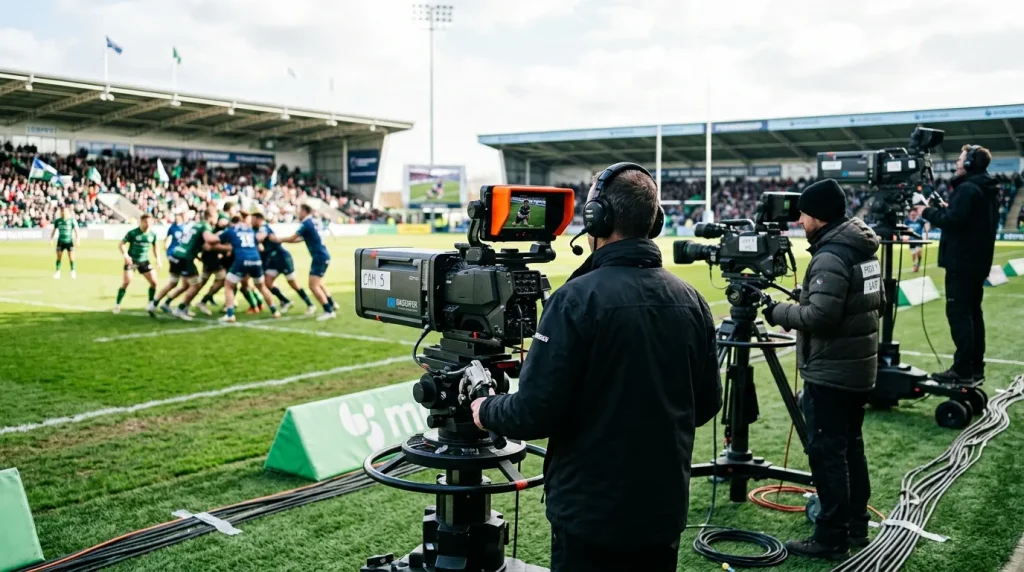
The rights deals shift across seasons. A tournament available on one operator this year may move to a different operator next year, or may be available on multiple operators simultaneously. Checking the streaming schedule before committing to an operator for a specific tournament is part of the practical work, particularly for bettors who plan their betting calendar around specific competitions. Different competitions have different commercial structures that shape availability, and the patterns are worth knowing.
The funded account requirement
Most UK operator streams require a funded account, an active balance, or a recent bet placement. The specific requirements vary. Some operators allow streaming with any positive balance regardless of betting activity. Others require a recent bet within a defined window, typically 24 hours. A few require an active bet on the specific match being streamed.
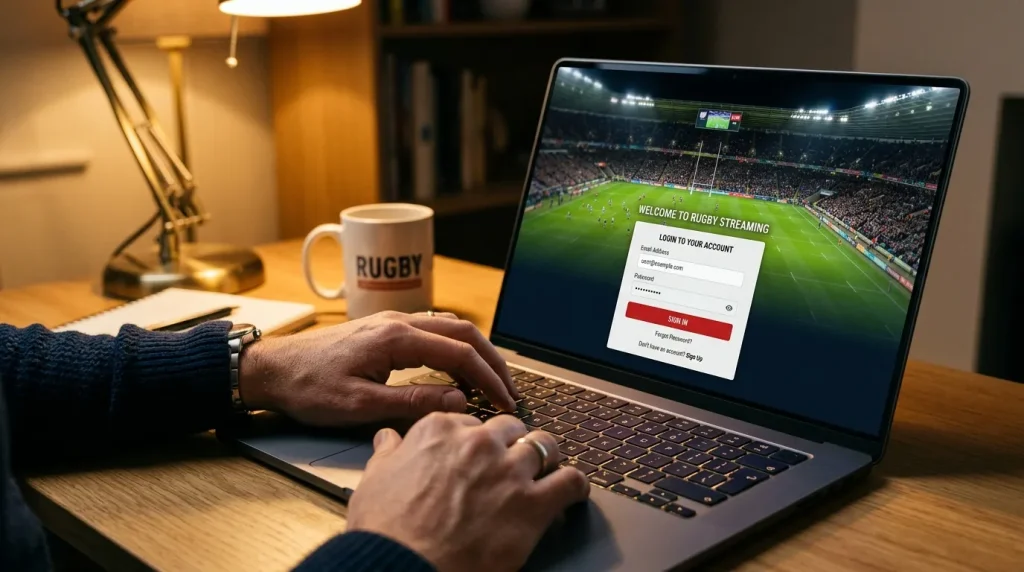
This is rights-driven rather than arbitrary. The operator has paid for streaming rights that depend on the streaming being part of a betting product rather than a free television service. The requirements ensure compliance with the licensing terms, but they do create friction for casual viewers. Bettors who genuinely want streaming as a feature need to plan their account funding and betting activity to maintain access during the windows they want to watch.
The geographical and device dimension
UK operator streams are usually restricted to UK-resident account holders, with geographical IP checks enforcing the boundary. Travelling abroad with a UK betting account often means losing access to streams during the trip, even when betting itself remains available. Some operators have arrangements that extend streaming access to certain European destinations, but the default is that streaming is a UK-only feature.
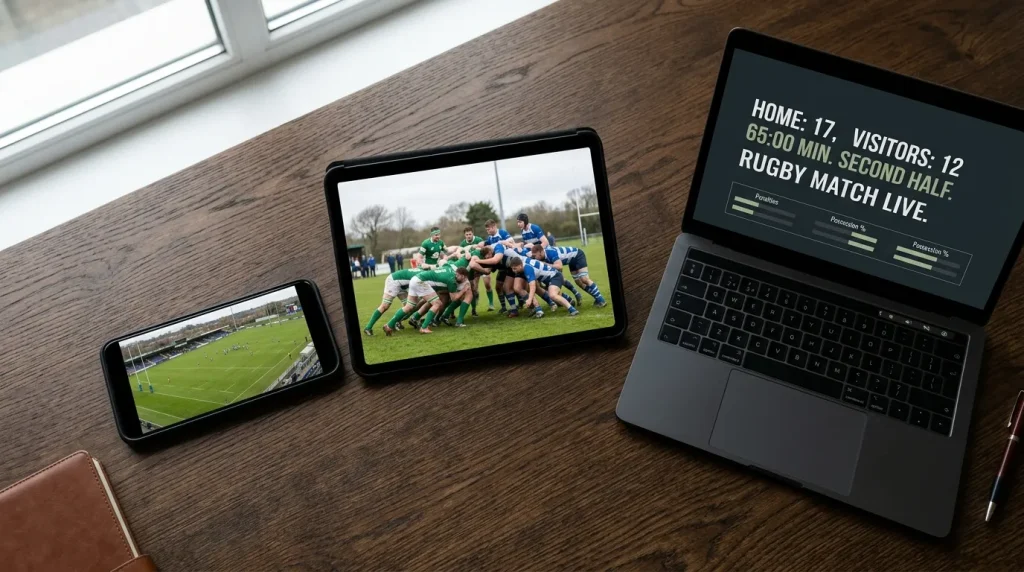
Device-level requirements have eased over the years. Most current streams work across iOS, Android, modern web browsers and major casting platforms. Older devices may struggle with some streams, and Chromecast or AirPlay casting to a larger screen works on most operators but with occasional quality degradation. Testing the stream on your actual devices before relying on it for an important fixture is sensible — surprises during the match are usually unfixable in real time.
The synchronisation question
The relationship between the stream and the betting markets matters because the markets respond to events the stream is showing. A try scored, a yellow card, a penalty awarded — each triggers an immediate market reaction that you see roughly in sync with the streamed picture. If you are watching the broadcast television feed and betting through the app, the sync is usually off because the two sources have different lag profiles.
The advantage of watching through the operator’s stream is that the picture and the lines move together. The disadvantage is that the stream lag means the actual events on the pitch happened before either you or the lines see them. Bettors who watch through television and bet on app sometimes get a slight time advantage on the picture but a slight disadvantage on price movement coordination. Bettors who watch through the operator stream get coordinated picture and lines but lag behind the actual match. Neither approach is strictly better; they suit different in-play styles.
Stream quality during peak demand
Operator streams can struggle during high-demand windows when many customers are watching simultaneously. A Six Nations Saturday afternoon with the headline match streaming on a major operator may produce buffering, occasional dropouts and quality degradation on the picture. The infrastructure is sized for typical demand but extreme peaks stress the system. The reliable operators have invested in capacity that handles peaks; the less reliable ones cut corners and the customer experience suffers.
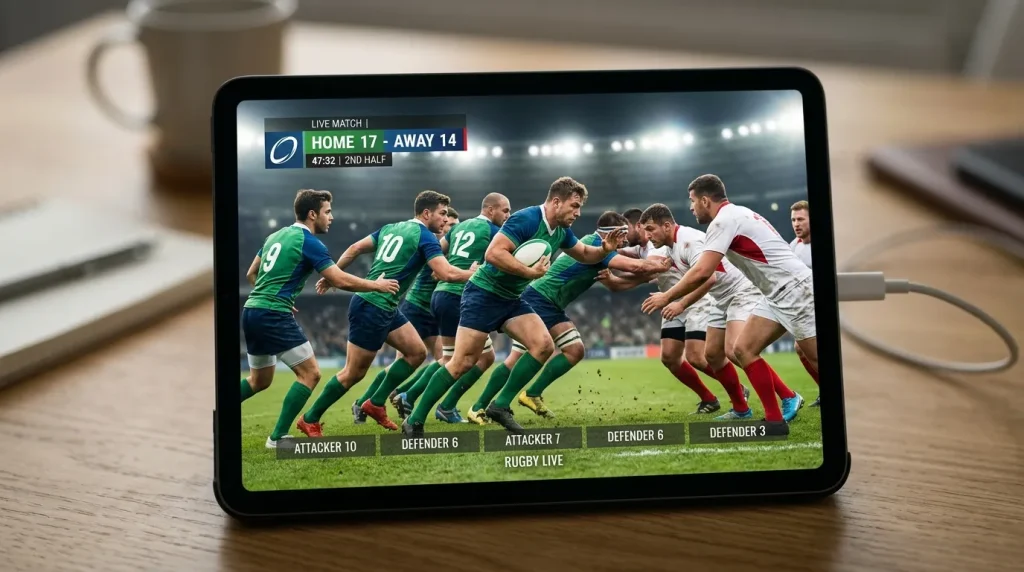
The pattern repeats annually around the biggest fixtures. Six Nations Super Saturday, Premiership final, World Cup matches — these are the windows where stream quality varies most between operators. Watching the same fixture across multiple operator streams (if you hold accounts with several) sometimes reveals genuine differences in stream reliability. Identifying the operator that handles peak demand best is worth doing if you bet heavily on the biggest fixtures.
The interaction with cash out and live markets
Streaming inside the betting app allows continuous evaluation of in-play markets without context-switching between television and phone. The cash out values you see while watching are responding to the same picture you are seeing, which makes the cash out decision more grounded than blind evaluation based on score and game state alone. The bet builder construction during a match similarly benefits from the embedded stream — you see exactly what is happening as you build the bet.
The combination of streaming, cash out and bet builder construction is what mobile-first betting platforms have built around. Each individual feature is useful; the integration multiplies the value. The operators that have invested in the integration produce a genuinely different in-play experience from the operators that offer the same features as discrete components. Knowing which is which requires using both — the marketing materials all sound similar but the actual experience differs.
Streaming as a research tool
Beyond in-play betting, streaming serves as a research tool for the next betting cycle. Watching matches you have not bet on builds the pattern recognition that informs future bets. The accumulation of match observation across a season produces the intuition that shapes how you read team news, weather conditions, tactical match-ups and individual player form. Bettors who watch matches systematically — not just the ones they have bet on — accumulate the analytical foundation that less engaged bettors lack.

The operator streams are useful here precisely because they are bundled with the account you already have. Watching a URC match on a Saturday afternoon costs nothing extra if the stream is included with your funded account, and the observation becomes part of the work that informs the following week’s URC betting. The cost-benefit of streaming as a research tool is essentially zero, which makes the time invested worthwhile even when no immediate bet is in play.
The integration with other markets
Rugby streaming is part of a broader streaming product on most operators, which means the same account that gives you Premiership streams may also stream tennis, snooker, football lower divisions and various international sports. The cross-sport availability matters because the betting habits often spread across multiple sports, and operators that handle streaming well across sports tend to handle the betting markets well too.
This is one of the reasons multi-sport bettors often consolidate around a small number of operators rather than spreading across many. The streaming product is sticky in ways that pricing alone is not. An operator with reliable streaming across multiple sports captures more of the customer’s overall activity than one with sharper rugby pricing but inferior streaming. The full product matters, and streaming is increasingly central to the full product.
The future direction of the feature
Streaming is likely to expand further as rights deals proliferate and operator competition pushes feature parity. Coverage of women’s rugby, lower-tier club competition and international rugby beyond the Six Nations is the area with most room for growth. The technical quality will continue to improve as bandwidth and codec efficiency advance. The integration with betting markets will deepen as the platforms mature.
What is unlikely to happen is operator streams becoming free of the funded-account requirement. The rights economics depend on the streaming being part of the betting product, and operators have no commercial incentive to provide free television. The customer who wants free coverage of rugby outside mainstream broadcast will continue to need either subscription television or alternative streaming services. The customer who wants integrated streaming as part of their betting experience will continue to find it increasingly central to what UK betting apps offer.
Do I need an active bet to watch a rugby live stream on a betting site?
The requirements vary by operator. Most major UK operators require a funded account and many require a recent bet within a defined window, typically 24 hours. A few require an active bet on the specific match being streamed. Checking the conditions before relying on a stream for a fixture is worth doing.
What is the picture quality like on rugby betting site streams?
Typically 720p or thereabouts — adequate on a phone or tablet, watchable on a laptop, slightly underwhelming when cast to a larger TV. The streams are derived from broadcast feeds and the quality is decent but not broadcast-grade. Audio can be variable, with some streams carrying broadcast commentary and others running silent or with ambient audio only.
Why is there a delay between the action and the betting site stream?
The stream lag is typically 30 to 90 seconds behind on-pitch action, comparable to satellite television delays. The lag is a structural feature of how the streams are distributed rather than something that can be eliminated. The markets respond to events on roughly the same lag, so the streaming picture and the betting lines stay coordinated even though both run behind the live event.
Articles
Prepared by the Rugby Betting Sites editorial staff.
