
Best Odds Guaranteed on Rugby Markets
 Available in US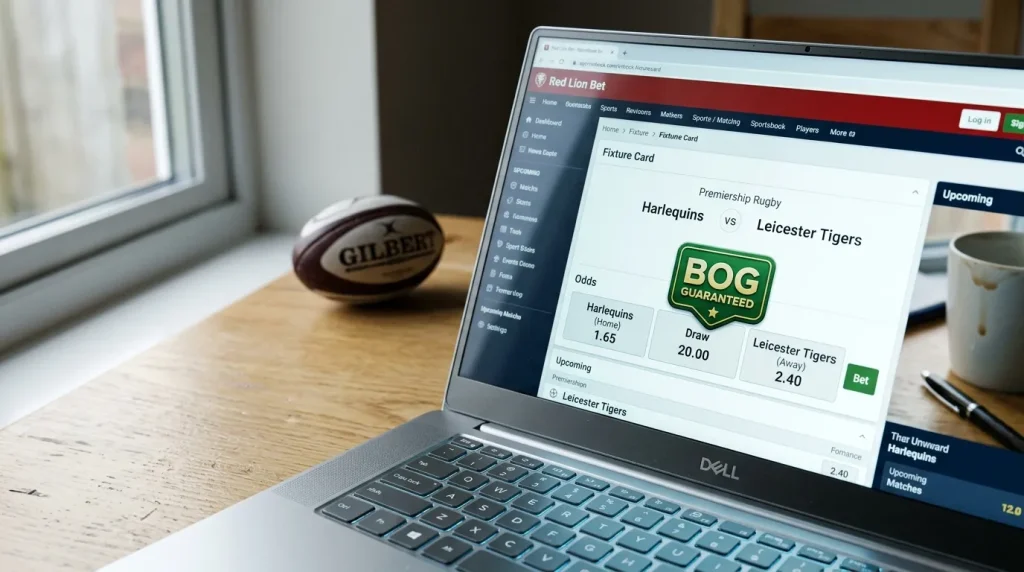
The Saturday morning my bet paid out 80 percent more than I expected
I had taken 11/4 about Northampton on the Thursday before they played Leinster in a Champions Cup pool match. By kick-off on Saturday the price had drifted to 9/2 — half the market had gone the other way on injury news that I had already read and dismissed. Northampton won by six. The bet returned at 9/2, not the 11/4 I had originally taken, because best odds guaranteed paid the higher price.
That single bet was a clean 80 percent uplift on the original return. No bonus, no promotion code, no rollover. Just a structural feature of UK racing and sport markets that quietly hands back value to anyone who bets early. Nine years on, BOG is the single promotional concept I rate most highly — and most of this article is about why, and where rugby books apply it.
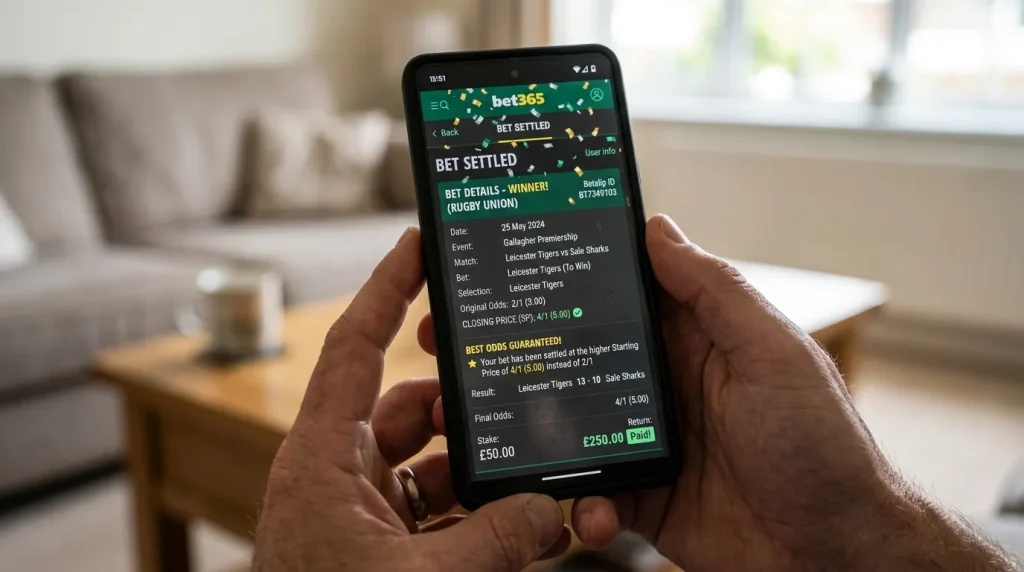
How best odds guaranteed actually works
The principle is simple. You take a price on a market. If the starting price or the official closing price is higher than the one you took, the bet pays out at the better number. If it is lower, you keep your original price. You never get the worse of the two.
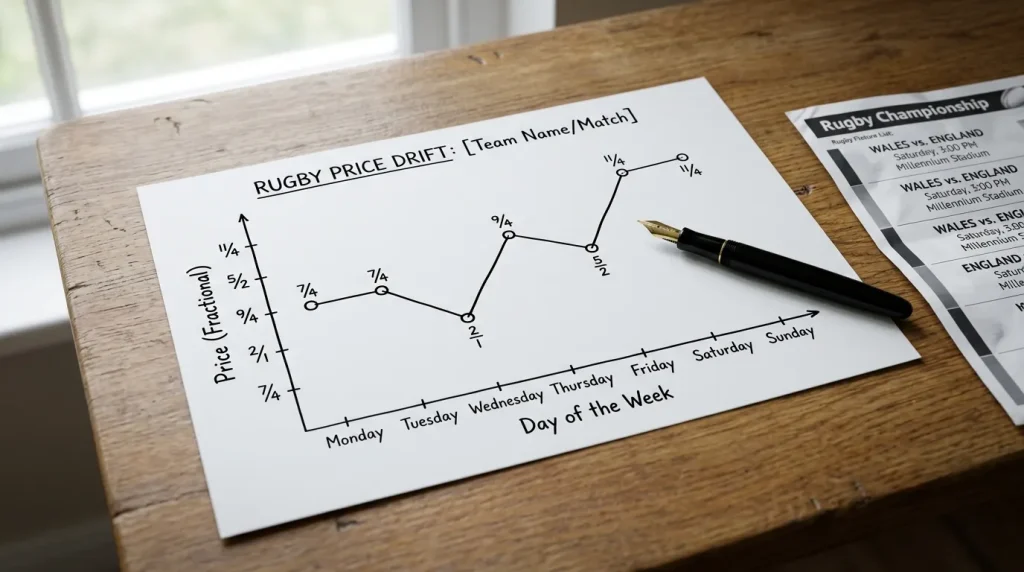
It originated in horse racing, where SP is a formal concept settled by a tic-tac panel at the track. In rugby and other team sports, books substitute their own closing price — usually the line live just before kick-off. The protection works the same way. If you take Bath at 7/4 on Wednesday and the closing price is 11/4, you get paid at 11/4. If it drifts the other way to 6/4, you keep your 7/4.
Where it applies and where it doesn’t on rugby
Coverage is patchier than it is in racing. Most UK books apply BOG to outright winner markets, sometimes to handicap markets, occasionally to over/under totals. Try-scorer markets, bet builders, requests and player props are almost always excluded. You will not get BOG protection on an enhanced odds boost — the boost is the offer.
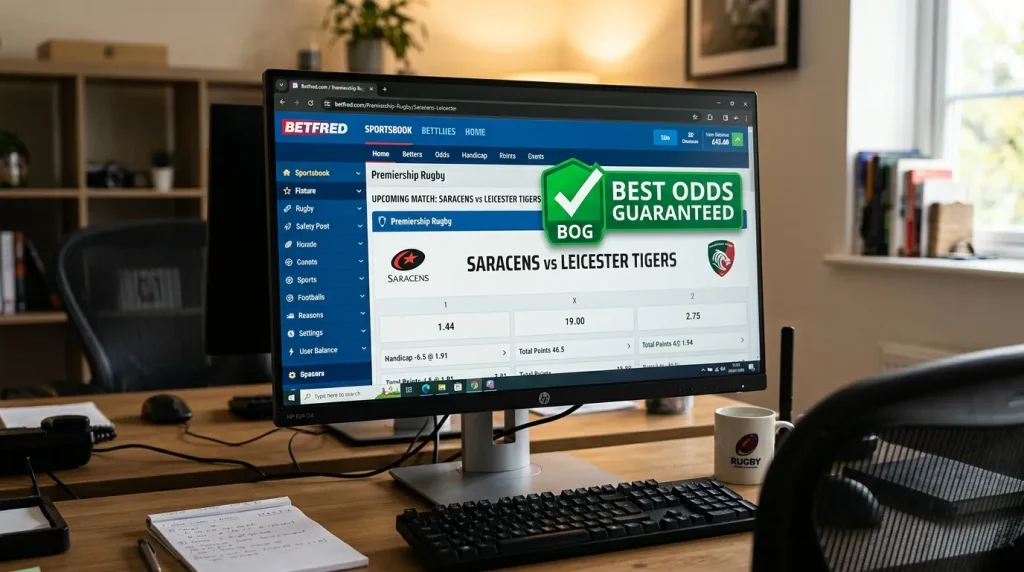
I check the terms before I rely on it. A book might offer BOG on Premiership outrights but exclude European Champions Cup, or apply it to international fixtures but not domestic. Some apply it only to bets placed on the day, others to bets placed up to 48 hours in advance. Read the conditions once, file them mentally, and stop guessing — you will be wrong about half the time if you guess.
Why BOG matters more than most promotions
The economic value of BOG depends entirely on how often prices move in your favour after you bet. Across my own records, roughly a quarter of pre-match bets see the closing price drift longer than the one I took. The average drift on those bets is about two ticks — meaningful but not enormous. So BOG adds maybe four or five percent to my expected return on bets I would have placed anyway.
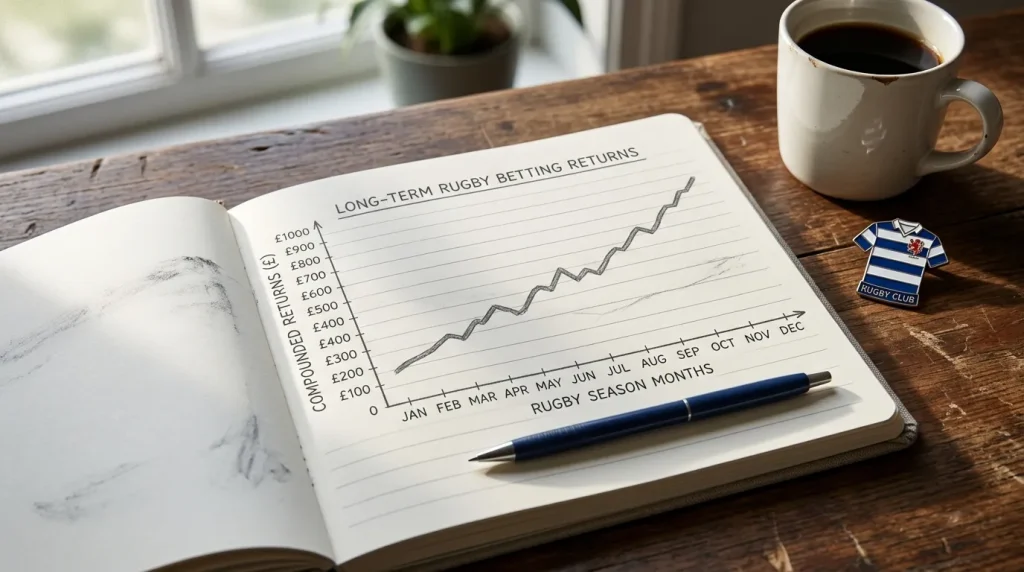
Four or five percent does not sound like much. It is. Most professional bettors are looking for a margin of two to three percent on their core volume. A passive feature that adds five percent on top is genuinely transformative — it can be the difference between flat and profitable across a full year. Treat it like compound interest, not like a freebie.
The case for betting early
BOG only pays you when prices drift longer. If you wait until kick-off and bet at the closing price itself, the protection is worthless — you have already locked in the final number. The whole point is to take a position before the market settles, then let the protection cover the downside of being early.
This pairs naturally with betting only with UKGC licensed books because BOG, dispute resolution and SP transparency are all underwritten by the same regulator. An unlicensed operator can advertise BOG and quietly settle bets at the original price when it suits them. You have no recourse. With a licensed book, you have the Independent Betting Adjudication Service and the regulator behind any complaint.
The early price discipline
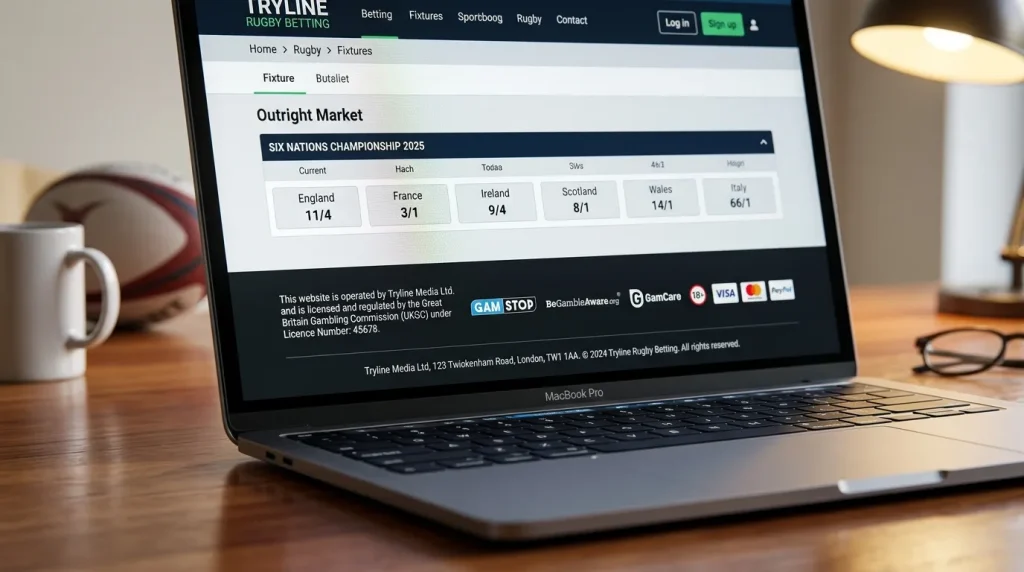
I look at the market on Tuesday or Wednesday for the weekend’s main fixtures. By that point team news is partial but not complete, weather forecasts are unreliable past Friday, and the public has not yet moved the line. If I have a position, I take it. If the price drifts longer between then and kick-off, BOG hands me the better number for free.
The discipline is genuinely about timing rather than analysis. The analysis happens first — I have a view, I have a stake size, I know what the price should be. Then I just need to act on it early enough for the protection to mean something. Bets placed in the final ten minutes before kick-off get no benefit from BOG even if the operator nominally offers it.

The starting price problem in rugby
In horse racing, SP is a real number set by an independent panel. In rugby, the closing price is set by the operator. This matters because different operators have slightly different closing prices, and BOG protection is calculated against the operator’s own number rather than a market-wide benchmark.
The practical implication is that not all BOG offers are equal. A book that closes its prices generously will pay out BOG bonuses more often than one that closes tightly. Some books are noticeably stingier with closing lines on outright winners, which means their nominal BOG offer is worth less than the same offer from a more generous book. The headline is the same, the economics are not.
Combining BOG with other promotions
The interaction with free bets is restrictive. Most books exclude free bet stakes from BOG entirely — the stake is already discounted, so the promotion does not stack. Enhanced odds boosts are also usually excluded, since the boost itself is the operator’s promotional contribution.
What does combine cleanly is BOG and standard cash stakes on outright markets. That is the sweet spot — your full stake is real money, the price is yours if it shortens, and the closing price is yours if it lengthens. Roughly 18 percent of my full-stake rugby bets over the last two seasons returned at a price longer than the one I took. None of those upsides would have existed without the protection.
What to watch for in the smallprint
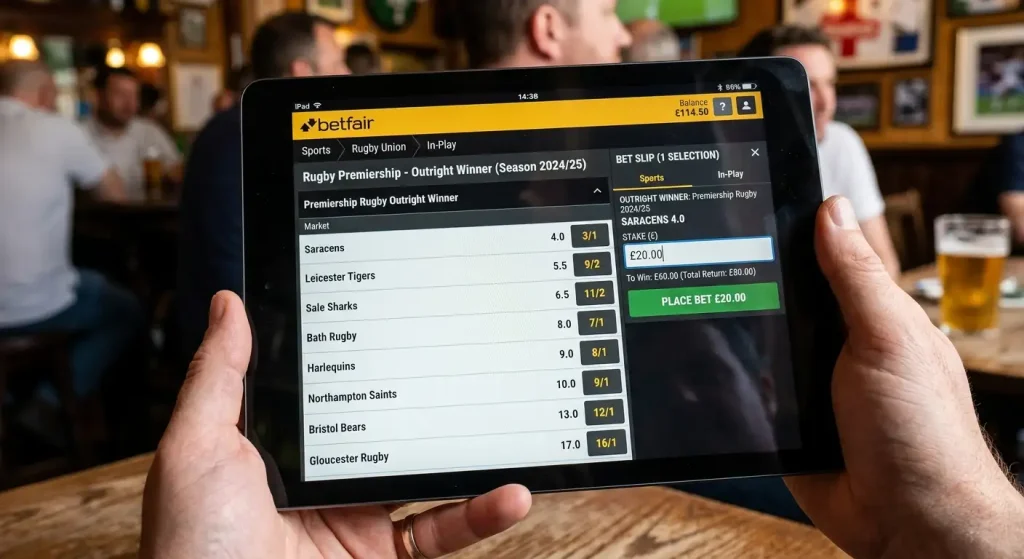
BOG terms vary in three places. The first is the qualifying window — some books apply it from market open, others only from the morning of the event. The second is exclusions — non-runners, void bets, postponed fixtures, dead-heat rules can all interact awkwardly with BOG. The third is the cap — a handful of books cap BOG payouts at a maximum price, often 25/1, which is irrelevant for most rugby outrights but worth knowing.
I have been caught once by an exclusion clause. A Six Nations fixture was rescheduled by two hours due to weather, the market was suspended and reopened, and the book settled at the original taken price rather than honouring the drift that happened during the suspension. The terms covered them. I learned to check the rescheduling clause specifically — it is usually buried near the bottom.
Why BOG quietly underpins serious staking
Most successful long-term punters do not chase boosts or free bets. They take early positions, find the best available price, and let structural features like BOG add small percentages over thousands of bets. The boring approach wins because it compounds. A single bet that pays an extra three quid because of BOG looks unremarkable. Five hundred such bets across a year is real money.
The mindset is the same one I bring to bankroll management and stake sizing — quiet, repeatable, and based on the maths rather than the marketing. BOG is the closest thing to a free lunch the UK regulated market offers. The lunch is small, but it is genuinely free, and turning it down because it is unflashy is a mistake I see new bettors make constantly.
The promotion I would keep if I could only keep one
If a regulator tomorrow forced UK books to drop every promotion except one, I would want them to keep best odds guaranteed. Free bets are mostly recycled stakes. Enhanced odds are mostly marketing. BOG is the only standard offer that systematically rewards bettors for behaving like sharp customers — taking positions early, accepting drift risk, and being patient enough to let the market come to them. The reward for that behaviour is small per bet and meaningful per season, which is exactly how good promotional value should look.
Does best odds guaranteed apply to all rugby bets?
No. Most UK operators apply BOG to outright winner markets and sometimes handicaps, but exclude bet builders, requests, player props and try-scorer markets. Check the specific terms on the book you use — coverage varies meaningfully between operators.
Do I get BOG on free bet stakes?
Almost never. Most operators exclude free bet stakes from BOG protection because the stake itself is already a promotional concession. Cash stakes on qualifying markets are where the protection genuinely pays out.
How early should I bet to take advantage of BOG?
As early as you have a confident view. The protection only pays out if the closing price drifts longer than the one you took, so betting at kick-off makes the offer worthless. Tuesday to Friday is the window where BOG adds the most value over a season.
Articles
Published by the Rugby Betting Sites team.
