
Six Nations Betting Sites: Where the 2026 Championship Markets Move First
 Available in US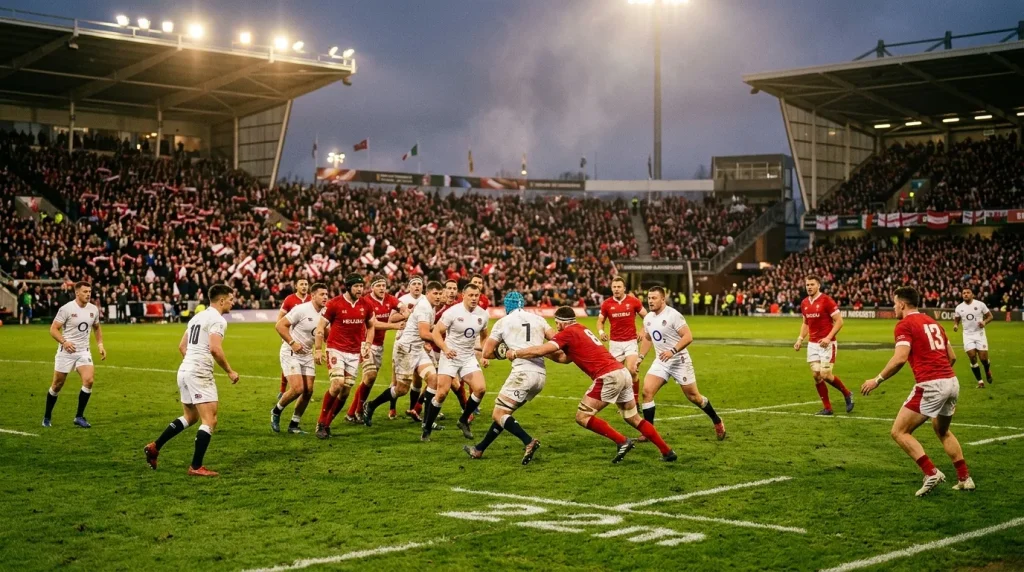
Why the Six Nations is the British punter’s calendar event
Every February the kitchen table in my flat becomes a triage station. Three laptops, two phones, a notebook from the previous tournament and a half-cold cup of tea. By the time the anthem starts on the first Saturday I have already moved roughly forty per cent of my annual rugby turnover. Six Nations is not a tournament I cover. It is the tournament my entire calendar bends around.
The reason is liquidity. When the opening round of the 2025 Championship went out on ITV, the England versus Ireland match pulled a peak audience of 5.2 million across all devices. A week later, England against France hit six million. Numbers like that do not just sell television advertising. They drag in casual punters by the hundreds of thousands, and that volume changes how the books behave. Margins compress on the headline 1X2 markets. Out-of-the-way exotics get a price they would never receive on a midweek Top 14 fixture. Bonus-point lines move thirty minutes before kickoff because somebody in Cardiff is sitting on a pre-tournament position they want to hedge.
If you only bet on rugby once a year, you almost certainly do it during this six-week window. And if you bet rugby year-round, this is the stretch where the markets are deepest and the price discrepancies between sites are the easiest to spot. The rest of this guide is built around that reality. I am not going to rank operators. I am going to show you what to watch and why, drawing on what the 2025 Championship told us and what the 2026 cycle is already showing.
The economy behind the Championship and what it means for odds
There is a number that no other rugby tournament in the world can put next to its name. The 2025 Six Nations generated 135.24 million dollars in media revenue from broadcast deals across the United Kingdom, France, Italy and Ireland alone. Strip out everything else — gate, hospitality, merchandise — and you are still looking at a competition that out-earns most professional sports leagues operating in northern Europe.
That money matters to a punter because it shapes everything downstream. The sponsorship portfolio for 2025 ran to seven brands with an average deal value of roughly 3.78 million dollars. Guinness alone signed long-term for a reported 15 million pounds, or 18.83 million dollars, per year across both the men’s and women’s Championships. The prize pool for the 2025 tournament reached 18 million pounds, distributed by ranking and bonus points. As Tom Harrison, Chief Executive of Six Nations Rugby, put it when the Guinness extension landed: “Guinness and the Six Nations have become synonymous, and everyone involved in the partnership, including our unions, is truly excited to continue our work together for many more years. This is a defining moment for rugby, with huge potential on the horizon and a genuine opportunity to widen the audience for the sport, to help secure its future.”
So why does this matter at three o’clock on a Saturday afternoon when you are deciding whether to back Ireland on the handicap? Because the volume of money flowing into the Six Nations underwrites the willingness of UK bookmakers to absorb large exposure. They will quote tighter on every market in this Championship than they will on a comparable URC fixture, because they know the turnover justifies it. Globally, the Six Nations 2025 reached close to 130 million fans, a six per cent rise on the previous year. That global engagement pulls in a broader pool of bettors, including ones who are not particularly price-sensitive, which actually widens the gap between sharp and casual lines on the same fixtures. In practical terms, the better Six Nations betting sites are the ones whose pricing reflects that volume — narrow on the headline, generous on the side markets, and aggressive on multi-leg builders. The rest are usually just feeding off the same data provider with a different colour scheme.
Broadcast windows and audience patterns that shape liquidity
Two ITV broadcasts last year did more to set the rhythm of my Saturday betting than any pre-match preview I read. England against Ireland on the opening weekend pulled 5.2 million peak viewers. The following weekend, England against France delivered six million. Those are not numbers you usually associate with rugby in the United Kingdom, and they had a measurable effect on betting flow.
Here is what nine seasons of watching this tournament have taught me about that flow. Markets are most active in the ninety-minute window before kickoff for any ITV-broadcast match. Liquidity on side markets — first try scorer, anytime tryscorer, exact margins — peaks at roughly forty-five minutes out. That is when the half-and-half punters arrive, see the pre-match build-up on television, and rush their final stake in. If you are looking for value on a long-shot try scorer, you generally do not want to be the last money in. You want to be in two days earlier, before the team announcement filters through and the price corrects.
The 2026 cycle has thrown a wrinkle in. YouGov reported that cumulative audience for the first round of the 2026 Championship was down twenty-seven per cent on 2024 and eight per cent on 2025. The decline is not catastrophic, but it shifts where the money congregates. With the Winter Olympics running in parallel, thirty-six per cent of sport fans would choose Six Nations over the opening ceremony, while thirty-one per cent picked the Olympics. That split actually helps you. When attention is divided, books cannot lean as heavily on volume-driven margin compression, so the cleaner liquidity moves into the matches that retain undivided audience — the marquee fixtures broadcast in primetime, principally the Anglo-French and Anglo-Irish meetings.
If you are picking which Saturdays to commit to, lean toward the slots without simultaneous broadcast competition. The lines will be sharper, the in-play feed faster, and the cash-out offers fairer.

What separates the strongest Six Nations betting sites
I get asked this every January, usually by someone who has not bet on rugby since the last World Cup. There is no universal answer. There is, however, a checklist I run before I commit a deposit to any site for the Six Nations specifically, and it is the same checklist every year with one or two refinements.
First, depth of bonus-point markets. The Championship is one of the few tournaments where bonus points genuinely swing outright prices, because a four-try win and a losing bonus point combine to make a one-loss champion realistic. A site that does not price the bonus-point markets to four decimal places, or that suspends them at half time, is not built for serious Six Nations punting. The strongest UK operators quote both team-specific and match-level bonus-point markets right through to the eightieth minute.
Second, handicap granularity. A site that offers only -12.5 and -17.5 on an Ireland-Italy fixture is not giving you any value. The good ones publish lines every two points, sometimes every point and a half, between -8 and -25. That granularity lets you find the seam where the book has overcorrected. On round-three fixtures, after one team has had a slow start, that seam can open by two or three points compared to where the closing line ends up.
Third, first try scorer depth. A poor Six Nations book lists fifteen names. A serious one lists every replacement, every potential late switch, and includes “No Try Scorer” as a quoted option. If the matchday twenty-three on the team sheet has thirty-six potential names across both squads, your book should price at least thirty of them. Otherwise you are betting into an artificially shallow market and the implied margin on the named runners is inflated.
Fourth, in-play behaviour during scrum resets and TMO checks. This is the single biggest separator between Six Nations-ready operators and the rest. A weak site will suspend the entire match market for ninety seconds every time the referee goes to the screen. A strong site keeps side markets live throughout and only suspends the spread of disposition markets for the duration of the actual review. Across a two-team Championship Saturday with ten TMO referrals, that adds up to roughly fifteen minutes of additional betting time, and that is fifteen minutes when value is at its sharpest.
Fifth, settlement speed on bonus-point and exact-margin markets. The Championship sees a lot of close-run finishes where bonus-point status changes in the last play. Sites that settle quickly — within fifteen minutes of the final whistle — let you redeploy capital into the evening fixture. Sites that take six hours leave you frozen, particularly if you were planning to stack a Saturday accumulator across both kick-off windows.

For a deeper dive into how the Grand Slam pricing has evolved historically, including what the 2025 Ireland and England positions did to the futures market through the tournament, I went through the long-term patterns in a separate piece on Grand Slam odds history.
Outright Championship and Grand Slam markets
Here is something most pre-tournament previews miss. The outright Championship market and the Grand Slam market are not the same thing, and the way books price them tells you which one they think is more likely.
An outright Championship bet wins on points. Four tries gets you a try-bonus, losing by seven or fewer gets you a losing-bonus, and the team with the most points after five rounds takes the title. That mechanism rewards teams that win ugly and rack up bonuses. The Grand Slam market, meanwhile, requires five wins from five — and pays a different price because the probability gap between “win the Championship” and “win every game” is usually significant.
The interesting trade is when those two prices imply different underlying probabilities. If a team is 11/8 for the Championship and 9/2 for the Grand Slam, the implied odds suggest one in three of their Championship wins come without going unbeaten. If you think the side is good enough to win every match but the book is underpricing that scenario, you take the Grand Slam ticket. If you think they are good enough to win the title with one slip, you take the Championship outright and accept the lower price.
The trickiest year for this trade was 2023 when Ireland were short for both markets, but the Grand Slam offered noticeably more value because the price implied a sub-fifty per cent chance of going through unbeaten, which their schedule did not warrant. The lesson generalises: when a top side has a benign fixture sequence, the Grand Slam is often the sharper play. When the schedule is brutal — back-to-back away fixtures against the other two top sides — the Championship outright is the more conservative position.
One technical wrinkle. UK books treat “Triple Crown” — the home-nations subset, won by beating England, Scotland, Wales and Ireland in the relevant cross-fixtures — as a third distinct market. Triple Crown odds for Ireland and England are usually short, because the home-nations group dominates the lower seeds. The genuine value in Triple Crown markets tends to sit with Wales and Scotland when their respective squad cycles look promising, because the implied probability sometimes drops below twenty per cent even when one good win at Twickenham or the Aviva is genuinely on the cards.
If you are building a multi-Championship position, the trick is not to stack correlated bets. A Grand Slam on Ireland plus a Triple Crown on Ireland is not two bets. It is one bet with a top-up clause. Make sure your second position is genuinely independent — for example, a top try scorer pick from a different squad — or you are paying double margin on a single underlying outcome.
Match markets in detail
The headline match market is the three-way result, but in Test rugby the three-way is almost always wider than the handicap, and that is where most informed money goes. Let me walk through the four markets that actually drive Six Nations turnover.
The 1X2 — home win, draw, away win — is mathematically clean but rarely the sharp play, because rugby draws are rare enough that the draw price gets neglected and the home-away split absorbs most of the book’s margin. You see prices like 1.30 home, 17.0 draw, 11.0 away on Six Nations match-ups, and unless you have a strong view on a backable home dog, there are usually better options.
The handicap is where the real action happens. A typical Six Nations line moves from -3.5 to -9.5 depending on the matchup. The genuinely interesting case is round three onwards, when one team has had a slow start and the line opens wider than form suggests. A Six Nations match handicap line tends to tighten through the tournament rounds as injuries reshape squads and form lines accumulate. The first round handicap on a top-seed favourite often sits at -11 or wider; by round four the equivalent matchup might be -7. If you can price the convergence yourself, the early rounds offer better dog value than the later rounds offer favourite value.
Totals on Six Nations matches typically sit between forty-five and fifty-eight points combined. Two factors push the line. Wales and Italy fixtures, particularly when played in poor weather in Rome or Cardiff, tend to come in low. Anything involving France at home tends to come in high, because the Stade de France pace and the French passing game inflate try counts. There is no magic formula here, but the pricing inefficiency I have seen most consistently across the 2024 and 2025 tournaments was on team-totals — the over/under on a single side’s points — particularly when the underdog at home was undervalued. Wales at home against France in 2025 was a classic case: the underdog total ran two points below where it landed.
Bonus-point markets are the most distinctly Six Nations of all the match markets. You will not see them priced this thickly at any other rugby tournament. A serious UK book quotes “winning try-bonus” — winning by any score while scoring four tries — and “losing bonus point” — losing by seven or fewer — as standalone three-way markets per team. There are also combined markets for “both teams to score four tries” and “neither team to earn a bonus point”. When two top sides meet in the closing weekend with the title on the line, the bonus-point markets become the swing event of the final twenty minutes, and books that suspend them too aggressively at the eightieth minute leave money on the table for the punters who can read the score-rate trend.
In-play windows and cash-out behaviour
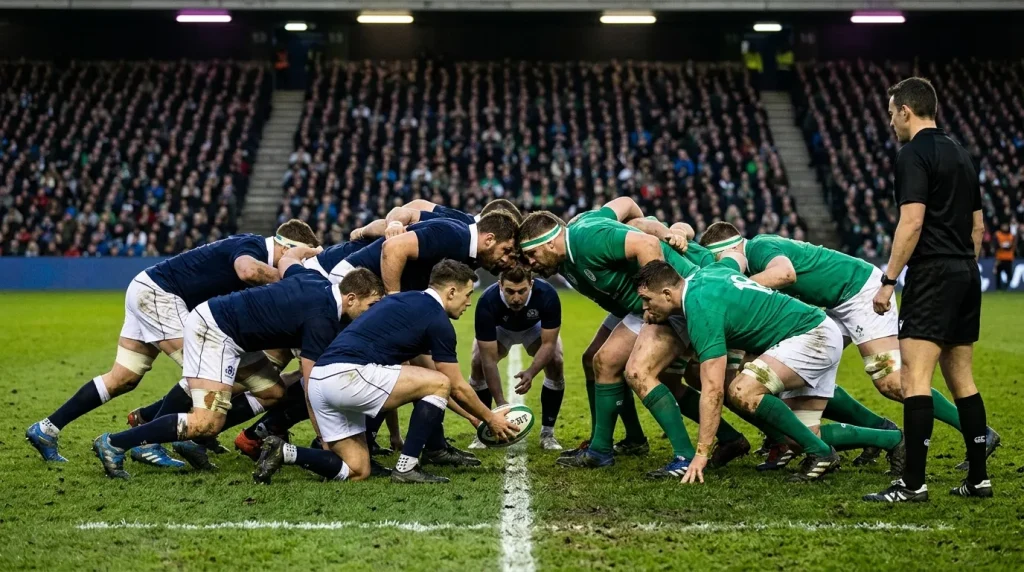
I learned the value of in-play discipline the hard way in the 2017 Championship. France against Wales in Paris, the famous twenty-minute scrum that finished after the ninety-fifth minute. I cashed out a Wales handicap two minutes before the scrum sequence started and then watched the price I would have received had I held drift past four. The book had not suspended properly, and the cash-out value reflected the pre-scrum game state, not the actual live state. Lesson absorbed: cash-out value during a Championship match is a function of what your book thinks the match state is, not what you can see on the broadcast.
Three patterns are worth knowing. Cash-out offers in the first twenty minutes of a Six Nations match are almost always poor value for the punter, because the book has a strong prior on the pre-match price and is not yet absorbing live evidence. The right play, if you have a pre-match position you no longer like, is usually to hedge with an opposite bet rather than accept a cash-out at fifteen minutes in. The lay is sharper.
Cash-out offers between minutes forty-five and sixty-five are usually the fairest. The book has a full half of live evidence, the squads are settled into their patterns, and the offer is closer to the true mathematical lay price minus a standard margin. If you are going to take a cash-out, this is the window.

Cash-out offers in the last ten minutes are typically poor again, because the book is over-weighting the closing scoreline trend and the cash-out reflects an “as is” projection that under-prices comeback variance. Real Test rugby produces more late tries than the book assumes, particularly in matches where the losing side is chasing a losing bonus point.
Half-time is its own window. Most Six Nations books suspend cash-out at the interval and reopen with a fresh number for the second half. The new number is usually informative — if it has shifted by more than twenty per cent from the price you saw at the forty-second minute, the book has updated its match expectation aggressively. You can use that as a signal for your own decision rather than as an offer to act on.
Price boosts, BOG and tournament-specific offers
The honest answer about price boosts during the Six Nations is that they are uneven. Some sites push genuine boosts on first try scorer odds in the run-up to round one. Others rotate the same three boosts they have been pushing all rugby season with the word “Six Nations” stuck on top.
The boosts that consistently offer real value are tournament-long futures during the opening week. Top try scorer of the Championship, top points scorer of the Championship and player to score a try in every match are markets that benefit from the book’s pre-tournament uncertainty, and when a site bumps them by ten or fifteen per cent above the standard quote in the first forty-eight hours of the campaign, that is genuine edge. I have taken those positions in five of the last six tournaments and they have outperformed the equivalent match-by-match approach.
Best Odds Guaranteed during the Six Nations is also worth checking carefully. Most UK books extend BOG to rugby Test matches as standard, but the exact wording matters. On outrights and antes, BOG often does not apply, which means that if you take a Grand Slam price at 5/1 and the Starting Price drifts to 8/1, you are paid at 5/1 with no protection. On match-level markets, BOG normally does apply for the headline three-way and handicap, but sometimes excludes the side markets like first try scorer and exact margin. Read your individual operator’s terms before round one and do not assume parity across operators.
Tournament-specific accumulator boosts during the Six Nations weekends often genuinely add value. A four-leg Saturday-Sunday Championship acca with a fifteen per cent boost, paid as a free bet rather than as cash, still nets out positive against the standard margin on the same four legs. The catch is the free-bet rollover, which most sites cap at six times the bonus amount with a minimum-odds restriction. If you do not actively use free bets, those boosts are worth less than they advertise.
What the calendar will demand of your account roster
The Six Nations rewards two things. Preparation in the autumn before round one, and discipline through the five Saturdays that follow. Sites that price the tournament seriously make both of those easier. The rest of them are just colour schemes around the same data feed. Pick the sites whose pricing reflects how seriously you intend to bet — and bear in mind that even within a single Championship, the right site for round one might not be the right site for round five. Keep two accounts funded, and let the markets tell you where the value is.
Frequently asked questions
A few questions land in my inbox every Championship, and they tend to stay the same year after year.
What odds have been historically offered on a Six Nations Grand Slam?
Pre-tournament Grand Slam prices for the favourite typically range between 7/2 and 6/1 depending on schedule and form. The 2023 Ireland Grand Slam went off at around 11/4 — short because of the home-fixture sequence. The 2025 Ireland Grand Slam started at roughly 9/2. For mid-table sides the Grand Slam price is almost always 50/1 or longer, and for Wales and Italy it rarely opens below 100/1.
How do bookmakers price the Triple Crown market?
Triple Crown odds are derived from the home-nations sub-bracket. The favourite — usually Ireland or England — typically opens around 5/4 to 7/4, depending on which home-nations matchups are away. Underdogs in Triple Crown markets often hold genuine value when their fixture pathway includes only one tough away leg.
Why does a Six Nations match handicap line tighten through the tournament rounds?
The opening round handicap is built on pre-tournament form, which carries the largest residual from the previous autumn. As the Championship progresses, each match adds fresh evidence and squad-availability data, so books update their expected margin downward when a favourite has not pulled away as predicted. By round four most lines on the same fixture would be one to four points tighter than the opening round equivalent.
Do bonus-point markets affect Six Nations outright pricing?
Yes, materially. Because the Championship can be won on bonus points, a side that scores four tries in every win earns up to five extra points over the tournament. Outright Championship odds incorporate that expected bonus rate. A team that is favourite on win count but weak on try-scoring volume is usually priced longer than a try-heavy side with the same win expectation.
Articles
Published by the Rugby Betting Sites team.
