
GamStop and What It Means for Rugby Bettors
 Available in US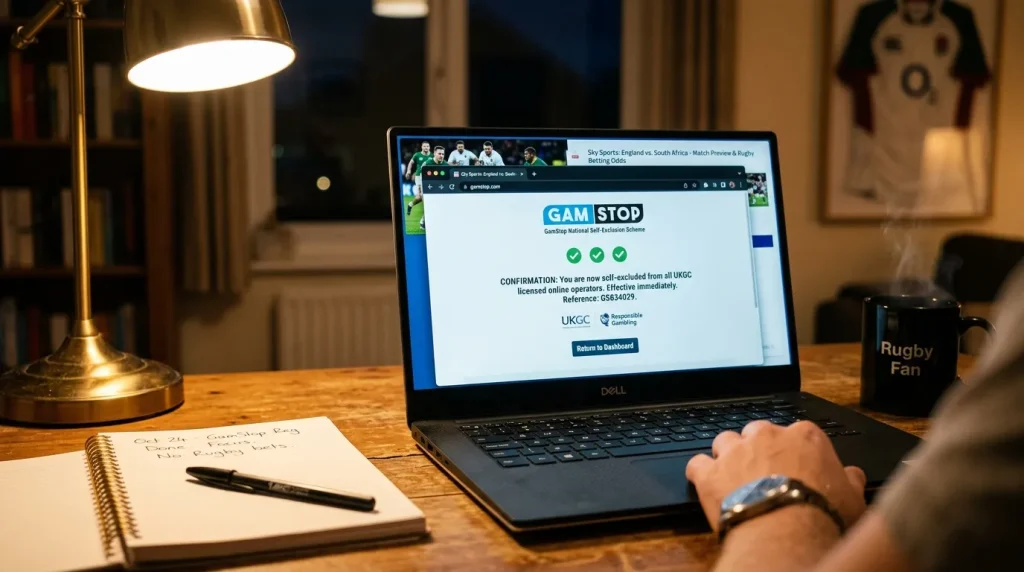
The friend who took a year off and the moment it changed the game
A friend of mine — sharper than me on form study, much worse at session discipline — registered with GamStop for twelve months in 2023. He told me about it the following weekend over a pint, slightly embarrassed, like he was confessing rather than describing a sensible decision. Six months later he was the most relaxed he had been in years. Twelve months in, he came back to betting with rebuilt habits and a new approach to bankroll. Nothing dramatic happened. He just stopped, and the stop was the whole point.
GamStop is the single most powerful self-control tool the UK regulated betting market provides. It is also the most misunderstood. People treat it as a crisis intervention, which it sometimes is, but the more common and frankly more useful application is as a structured pause — a deliberate decision to step away from a high-engagement activity for a defined period. The framework around it is worth understanding before you ever need to use it.
What GamStop actually is
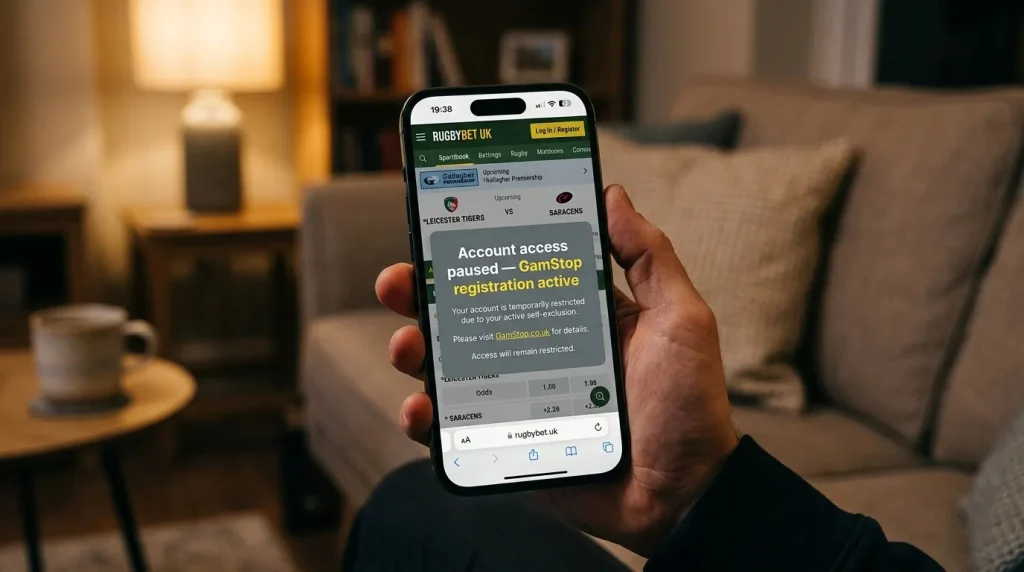
GamStop is the national online self-exclusion scheme for Great Britain. A single registration excludes you from every UKGC licensed online gambling operator simultaneously — every sportsbook, every casino, every bingo site, every poker room. The operator side of the exclusion is mandatory. Licensed operators are legally required to check the GamStop register and refuse service to anyone on it.
The scheme launched in 2018 and is now mature, well-funded and integrated into every UKGC licensee’s account creation and login flow. As one regulator put it, “The Commission has been working to ensure that the industry is well regulated and that consumers are protected.” GamStop is the most visible part of that consumer protection architecture for online customers.
How a registration actually works
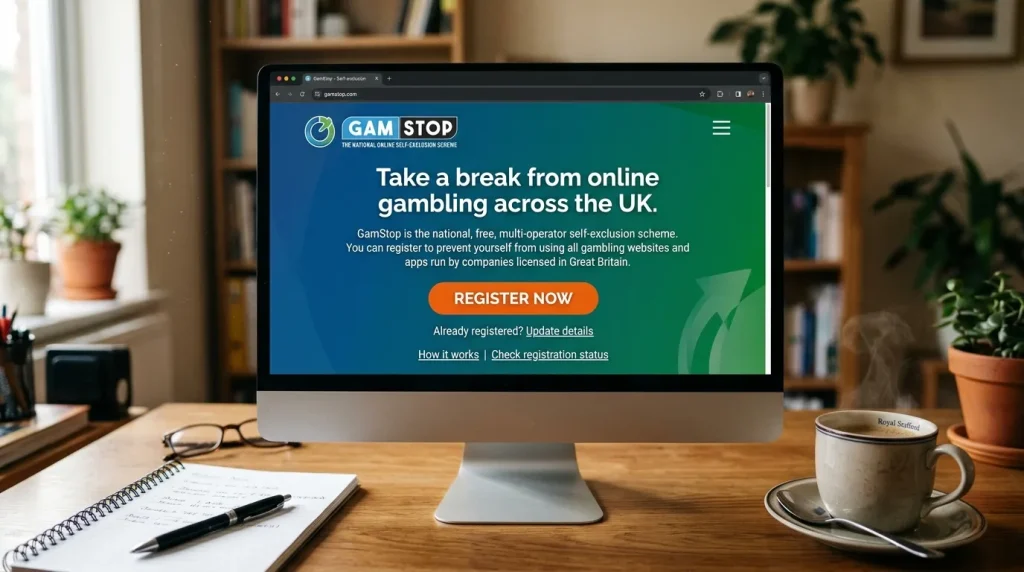
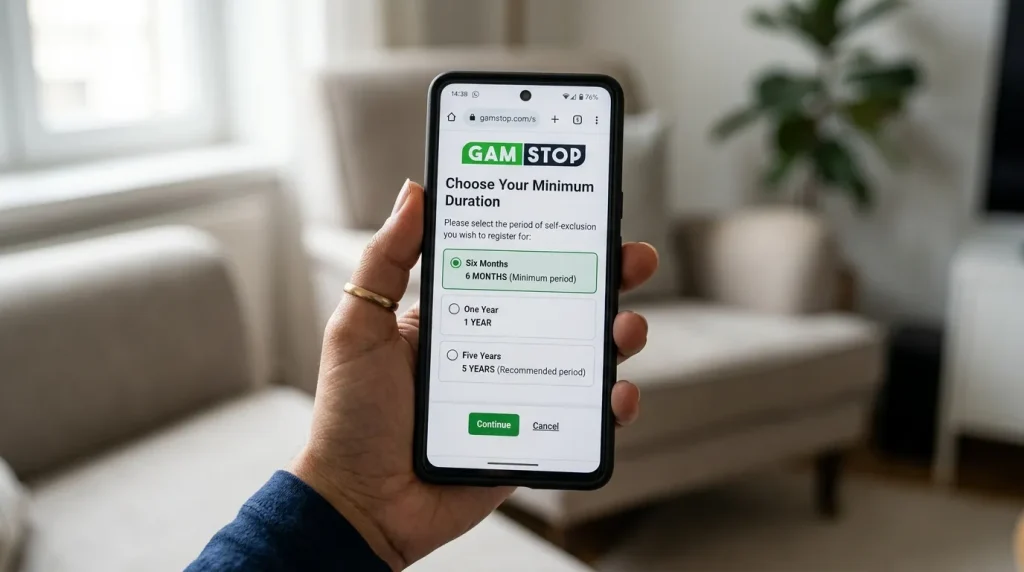
You visit the GamStop website, enter your full name, date of birth, postcode and email address, and choose an exclusion period of six months, one year or five years. The system then propagates your details to every UKGC licensed operator, usually within 24 hours. Existing accounts are closed. New account creation with the same details is refused.
The data check is reasonably robust. Operators must match on multiple identifiers — name plus date of birth plus address, typically — so trying to circumvent by varying spelling or using a different email address generally fails. The system is not perfect, but it is far harder to slip through than people assume, and the consequences for operators that allow excluded customers to register are significant fines and licence reviews.

The duration question and how to choose
The three periods exist for genuinely different use cases. Six months is the right call for a reset — a few stressful months, a streak of impulsive sessions, a desire to genuinely take a break and come back with rebuilt habits. One year is the most popular choice and the one I would generally suggest for a first registration, because it is long enough to embed new patterns and short enough not to feel terminal. Five years is the strongest option, used by people who want to step away from online gambling for the medium term or who have tried shorter periods and want something more decisive.
The key fact is that the period cannot be shortened once it begins. You can extend, but you cannot pull it forward. This is intentional — the irreversibility is what makes the commitment meaningful. Picking the right duration before you start matters because the system will not let you change your mind in week three.
What happens at the end of the period
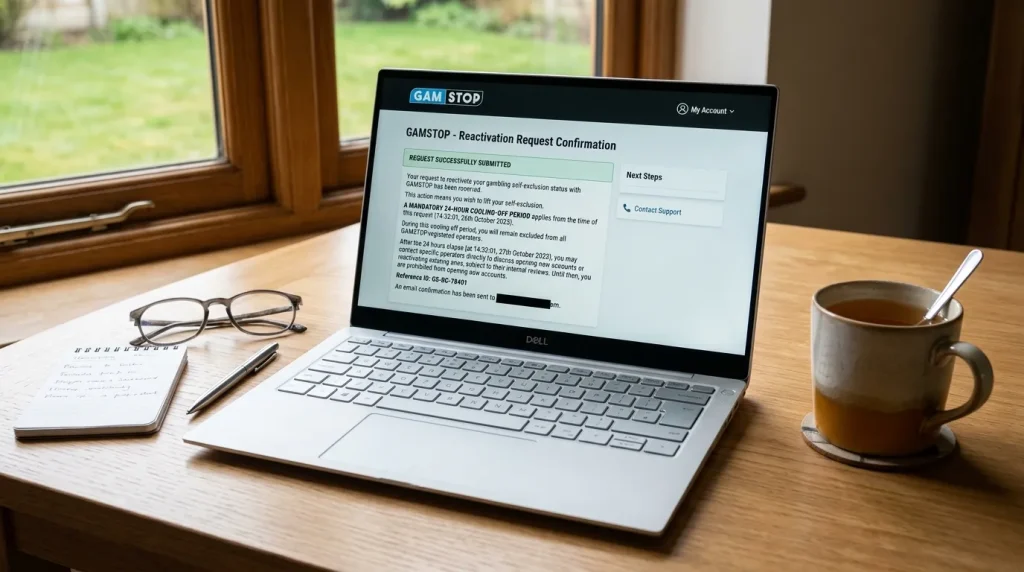
Exclusion does not lift automatically. At the end of the chosen period, the registration remains active until you actively contact GamStop and request reactivation of access to operator services. There is a mandatory cooling-off period — typically 24 hours — between reactivation and the first operator allowing you to register an account again.
This is deliberate friction. The cooling-off prevents people from impulsively reactivating at the moment the exclusion expires. Most people who reactivate do so after a few days or weeks of consideration, which is exactly the behaviour the system is designed to encourage. A return to betting that has been thought about for a week is structurally different from one decided in the heat of a Saturday afternoon.
The scope of the exclusion and what it does not cover
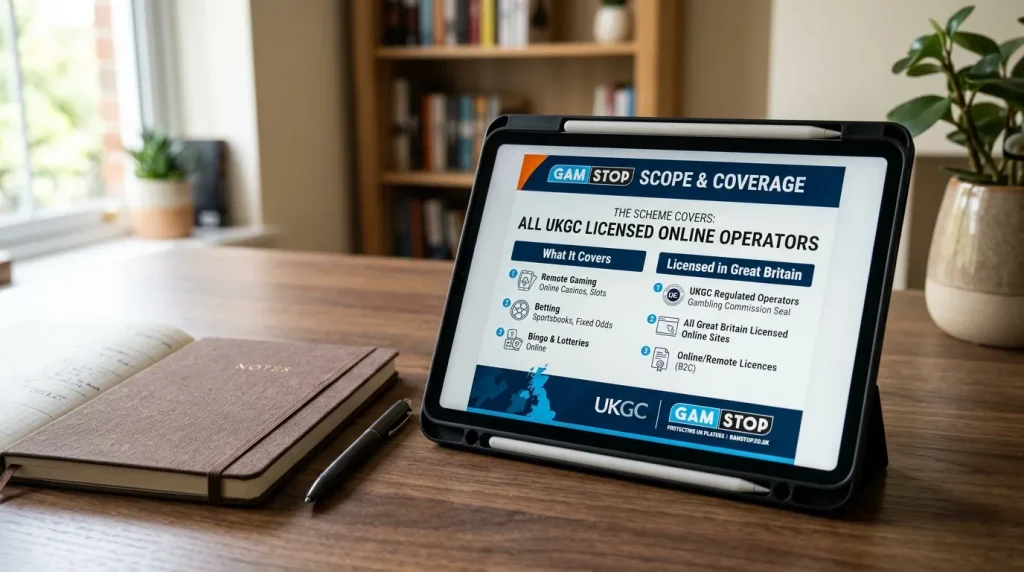
GamStop covers UKGC licensed online operators. It does not cover land-based betting shops, casinos or arcades — those operate under separate self-exclusion schemes administered by the relevant trade bodies and individual venues. It does not cover the National Lottery directly, though similar exclusion options are available. It does not cover offshore operators that are not UKGC licensed.
This last point is important. Offshore sites that target UK customers without a UKGC licence are not part of the scheme and will accept your registration regardless of GamStop status. This is one of the strongest reasons to stick to the UK licensed market and the protections it provides — the whole self-exclusion architecture only works inside the regulated perimeter, and stepping outside that perimeter defeats the purpose of registering in the first place.
The relationship to operator-level self-exclusion
Single-operator self-exclusion is also available — you can ask any UKGC licensee to close your account for a defined period without registering across the whole market. This is sometimes appropriate if a specific operator’s UX is driving impulse behaviour but other accounts are working fine. More often it is a half-measure that fails because customers simply move to another licensed operator.
If you are excluding from one operator because of generic over-engagement rather than something specific to that brand, GamStop is the better tool. The point of exclusion is to remove access, and removing access to one operator while keeping it to twenty others does not actually remove access. The friction needs to be system-wide to be useful.
The myth of unlicensed alternatives
A common pattern after GamStop registration is the appearance of marketing for non-GamStop sites — offshore operators that explicitly advertise themselves as accepting customers excluded under the scheme. These sites should be avoided categorically. They are not regulated by the UK Gambling Commission, they have no obligation to honour any consumer protection, and the customers who use them have no statutory recourse if anything goes wrong.
The reason these operators target excluded customers is obvious — excluded customers are by definition the people most likely to gamble impulsively if given access. The economics of running a non-GamStop site depend on capturing exactly the customers who registered for protection. The very existence of that business model tells you what kind of operator runs it.
The mindset shift that makes registration easier
The hardest part of registering is psychological, not practical. People interpret GamStop as an admission of failure, a confession that they cannot control their own behaviour. This framing is exactly backwards. Registration is an act of control — a deliberate, considered decision to use a powerful tool that exists precisely because human willpower is unreliable around immediately gratifying activities.
Almost everyone I know who has registered describes the same feeling afterwards. Not shame, but relief. The constant low-level mental load of deciding whether to bet, how much, on what, is gone. That load is heavier than people realise until it lifts. Anyone who finds themselves thinking about betting more than they want to be thinking about betting is a candidate for a defined break, regardless of whether they are actually losing money.
Rugby-specific considerations during a break
The rugby calendar makes timing matter. A six-month exclusion that starts in September runs through the autumn internationals and the early Six Nations — a high-engagement period that some people deliberately want to step away from. The same six months starting in April covers the European finals, Premiership semis and the summer internationals tour. Both are coherent choices; the right one depends on which part of the year you find hardest to manage.
The thing I would actively encourage is engaging with rugby in non-betting forms during the exclusion. Watching matches as matches rather than as collections of markets, reading match reports for narrative rather than form, following players and clubs because you care about them rather than because they affect a settlement. Many people rediscover during a GamStop period that the sport is more interesting than the bet, and that rediscovery often shapes a healthier relationship with betting if and when they return.
What I tell people considering registering
If you are considering it, do it. The threshold for registration is not “I have a problem” — it is “I want a defined break and I want it to actually happen.” The lower threshold catches more people earlier in the cycle, before patterns harden. It is the same logic as a holiday from work — you do not need to be burnt out to take one, and taking one earlier prevents getting to the point where you need it desperately.
The single most useful sentence I have heard about GamStop came from someone who had used it twice. He said the second time was easier than the first, because the first time had taught him that the experience on the other side was good rather than punitive. The first registration is the leap. Everything after is just management. Knowing the tool exists, knowing how it works, knowing it has been used effectively by thousands of ordinary bettors makes the leap much smaller than it appears from outside.
How quickly does GamStop registration take effect?
Registration is processed and propagated to all UKGC licensed operators within 24 hours. Existing accounts begin closure immediately and new account creation is refused across the regulated market for the duration you select.
Can I cancel a GamStop registration early?
No. The chosen period — six months, one year or five years — runs to completion and cannot be shortened. At the end of the period you must actively contact GamStop to reactivate access, with a further cooling-off window before the first operator allows new account creation.
Does GamStop cover betting shops and offshore sites?
No. GamStop covers UKGC licensed online operators only. Land-based betting shops, casinos and arcades use separate self-exclusion schemes. Offshore operators outside the UKGC licensing regime are not part of GamStop and will accept registrations from excluded customers, which is one of several reasons to avoid them.
Articles
Written by the editors at Rugby Betting Sites.
