
Women's Rugby Betting — A Growing Market Worth Understanding
 Available in US
The Twickenham crowd that changed how I think about women’s rugby markets
The 2025 Women’s Rugby World Cup final at Twickenham produced a stadium atmosphere I had not experienced at a women’s sporting event before. The home support was overwhelming, the rugby was excellent, and the betting markets across UK operators had genuine depth on a tournament that five years earlier would have warranted only outright winner pricing. The growth was visible, and the markets had grown with it.
Women’s rugby has moved from peripheral to central in the UK betting landscape over the past two seasons. The Red Roses dominance, the World Cup hosting, the increased visibility of the women’s Six Nations and the deepening club competition have all combined to produce markets that are now serious enough to merit specific attention. This article is the working frame for treating women’s rugby as a genuine betting opportunity rather than a novelty.
The structural shape of women’s rugby
The international calendar centres on the women’s Six Nations and the Women’s Rugby World Cup, with the Pacific Four Series, autumn internationals and other tournaments filling the calendar between. England’s Red Roses have been the dominant force across recent years, with consistent winning margins that have shaped the betting markets correspondingly. France, New Zealand and Canada are the principal challengers, with Ireland, Italy and the rest of the home nations forming the next tier.
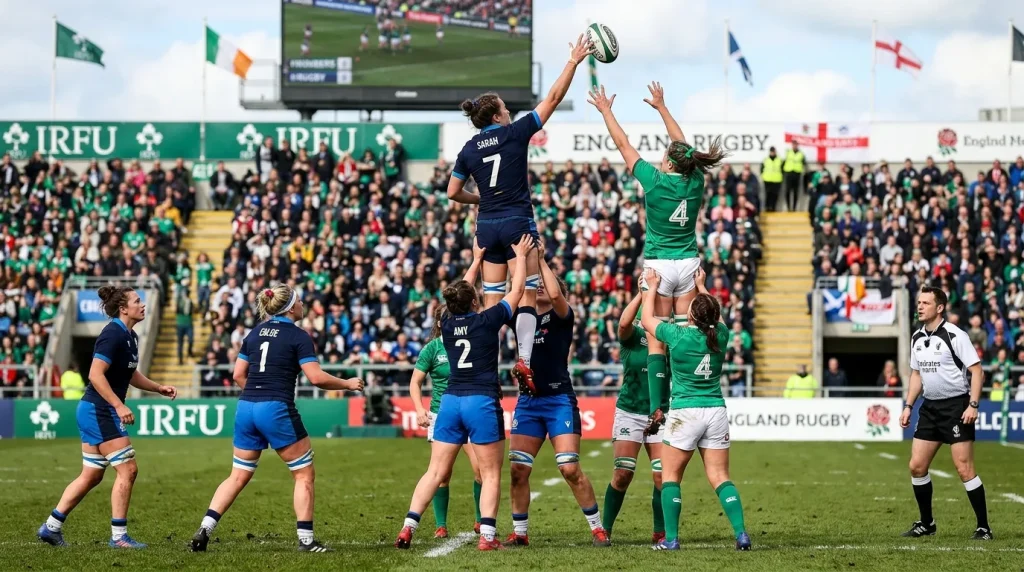
Club rugby in the UK runs through the Premiership Women’s Rugby (PWR), with most leading England internationals playing for clubs aligned with major men’s organisations. The standard is rising steadily, the squads are deeper than they were five years ago, and the betting markets — where they exist — reflect a competition that is meaningful rather than marginal.
The Red Roses dominance and how it shapes pricing
England’s Red Roses are heavy favourites in most international fixtures they play, and the handicaps reflect this. Match-day handicaps of 20 to 30 points are common against second-tier opposition, and even against direct rivals like France the lines tend to favour England in home fixtures. The pattern produces tight prices on the Red Roses to win and longer prices on covering large handicaps.

The genuine betting question is not whether the Red Roses will win — they usually do — but whether they will cover the spread and whether the totals lines reflect their attacking output appropriately. England’s attacking style produces high-scoring matches when the conditions are favourable, with totals over 50 points common in dry-weather home fixtures. The lines often account for this but the granularity varies across operators, and the books that price England’s attack most conservatively tend to be the better value for over backers when conditions favour scoring.
The 2025 World Cup as a market-shaping moment
The 2025 Women’s Rugby World Cup, hosted by England, reshaped both the women’s game and the betting markets around it. The tournament’s broadcast reach, attendance numbers and overall visibility were genuinely transformative for the sport’s commercial standing. The final at Twickenham was a landmark moment in English rugby, and the betting markets through the tournament saw deeper liquidity than any previous women’s competition.

The post-World Cup effect on subsequent women’s markets has been visible. Operators that previously offered outright winner pricing only on women’s tournaments now offer match outcome, handicap and totals on most fixtures. Some have introduced try scorer markets on key matches. Bet builder availability has expanded to cover women’s fixtures alongside men’s. The market depth that emerged for the World Cup has persisted in the women’s Six Nations and subsequent international windows.
The women’s Six Nations as a working market
The women’s Six Nations runs in parallel to the men’s tournament, with matches typically played the weekend before or after the men’s equivalents. The competitive structure mirrors the men’s — five matches each, the same five-round format. The competitive picture has been more lopsided in recent years, with England’s dominance producing winning margins that affect how the betting markets work.

The handicap markets are where the work pays off. England’s matches against weaker opposition can produce huge final margins, but the rate of covering specific handicaps varies based on weather, squad rotation and the opponent’s defensive setup. Backing the underdog with handicap in England’s away fixtures, when the squad is rotated, has been productive across multiple seasons. The lines do not always adjust for rotation in women’s rugby the way they do in men’s, and the value windows can be larger as a result. Live streaming coverage of the matches makes in-play assessment more practical than it was even two seasons ago.
The contender market beyond England
Outright winner markets on women’s Six Nations almost always have England as heavy favourites — typically at 1/3 to 1/5 — with France as the principal challenger at moderate prices and the other nations at long odds. The structure of the outright market produces little value at the top end, but the each-way and place markets can be productive when operators offer them. Backing France each-way at appropriate place terms has paid out in tournaments where they have run England close.
Beyond the title race, secondary markets — top try scorer, top points scorer, Triple Crown, Wooden Spoon — exist on some books and can offer better value than the title outright. The top try-scorer market tends to be priced fairly because the top finishers across recent tournaments have been from a relatively predictable set of England backs, but the lines on individual prop and back-row try-scorer markets occasionally reflect outdated assumptions about positional scoring patterns.
Squad rotation and the cap depth
Women’s rugby squads have deepened significantly across the past five seasons, with the top nations now able to rotate first-choice players across multi-match windows without serious quality drop-off. The implication is that lineup announcements matter — a Red Roses team with rotation against weaker opposition is still likely to win, but the margin may be 15 points rather than 30, and the handicap line might not adjust appropriately.

Tracking who starts and who is rested across the tournament is part of reading the lines. England in particular has shown willingness to rotate through pool fixtures and reserve full-strength selection for key matches. France has done the same. Operators that adjust their handicap lines for full rotation produce sharper markets; operators that maintain similar lines regardless of selection create the value opportunities. Reading the team news 48 hours before kick-off and comparing it against the morning’s lines is where the recurring edges live.
The club rugby landscape
The Premiership Women’s Rugby (PWR) is the principal English club competition and the most developed women’s club market for betting purposes. Markets on PWR fixtures have grown alongside the international markets, with most major operators now offering match outcome and handicap on regular-season fixtures. The competitive picture sees a small group of top clubs — typically including Saracens Women, Bristol Bears Women and other established sides — dominating, with the remainder of the league producing more variable results.
The pricing on PWR fixtures is generally less sharp than the equivalent men’s Premiership fixtures because the betting volume is lower and the operator algorithms have less calibrated data to work from. The implication is that bettors who follow the league closely have genuine information edges, particularly around squad availability, injury news and form patterns that don’t get mainstream coverage. The market is not large, but the work is rewarded.
Weather and conditions in women’s rugby
Weather affects women’s rugby in patterns similar to but not identical with the men’s game. The set-piece battle remains crucial in wet conditions, and lineout accuracy can suffer more dramatically in heavy rain. The kicking exchanges that often dominate wet men’s matches happen in women’s rugby too but with slightly different territorial calculus given the average kicking ranges and team setups.

The implication for totals betting is similar but the magnitudes differ. A wet women’s international can drop the totals expectation by 10 to 15 points from dry-weather lines. A dry, warm day with two attacking sides can produce totals well above the line. Reading the conditions against the matchup is part of the standard work, and the operator lines sometimes account for this more conservatively than they do in men’s matches because the data sample is smaller.
The international tour windows
Women’s international tours — the Pacific Four Series, end-of-year tours, summer fixtures — produce markets that vary in depth depending on the profile of the fixture. England versus New Zealand attracts genuine market attention; England versus a smaller nation may have only outright pricing without secondary markets. Reading what markets are available before settling on a betting approach is part of the prep, since the markets you want may not exist.
The fixtures that attract sharper pricing tend to be the ones involving World Cup contenders against each other. England-France, New Zealand-Australia, Canada-USA — these markets attract enough volume to produce competitive pricing. The fixtures involving developing nations or experimental selections produce thinner markets where the operator lines may be more conservative than the actual probability picture warrants.
Where the women’s market is heading
The trajectory of women’s rugby betting markets has been consistently upward, with each tournament cycle producing deeper offerings on more fixtures. The 2025 World Cup was an inflection rather than a peak — the markets that emerged for the tournament have persisted and grown, and the operators that invested in women’s pricing during the World Cup are now competing on women’s markets as a competitive feature.
For bettors paying attention now, the opportunity is to build experience on a market that is still developing. The pricing will sharpen as volume grows, the granularity will improve as more data accumulates, and the easy edges available today will narrow over time. The bettors who do the work now — following the squads, reading the team news, watching the matches with an analytical eye — will have built genuine expertise by the time the markets mature fully. Women’s rugby is no longer a peripheral betting concern, and the bettors who treat it as one are missing a genuine opportunity that will only grow more competitive as the broader market wakes up to it.
Which UK betting sites offer the best women"s rugby coverage?
Major UKGC licensed operators have expanded women"s rugby coverage significantly since the 2025 World Cup, with most now offering match outcome and handicap markets on women"s Six Nations and major international fixtures. Coverage of the Premiership Women"s Rugby (PWR) varies more, with mid-sized operators sometimes offering more comprehensive club-level markets.
Why are women"s rugby handicap lines often unfavourable to England?
England"s Red Roses have been heavily dominant in international rugby, with regular winning margins of 20 to 30 points or more against most opponents. Handicap lines reflect this dominance, and the value question is usually whether England will cover the published spread rather than whether they will win.
Has the 2025 World Cup permanently changed women"s rugby markets?
The tournament produced a clear and persistent expansion in market depth across operators. Match outcome, handicap and totals markets are now standard on women"s international fixtures, with some operators offering try scorer and bet builder markets that were previously men"s-only. The expansion has continued into subsequent international windows rather than reverting.
Articles
Created by the "Rugby Betting Sites" editorial team.
