
Rugby Total Points Over/Under Markets — Reading the Total
 Available in US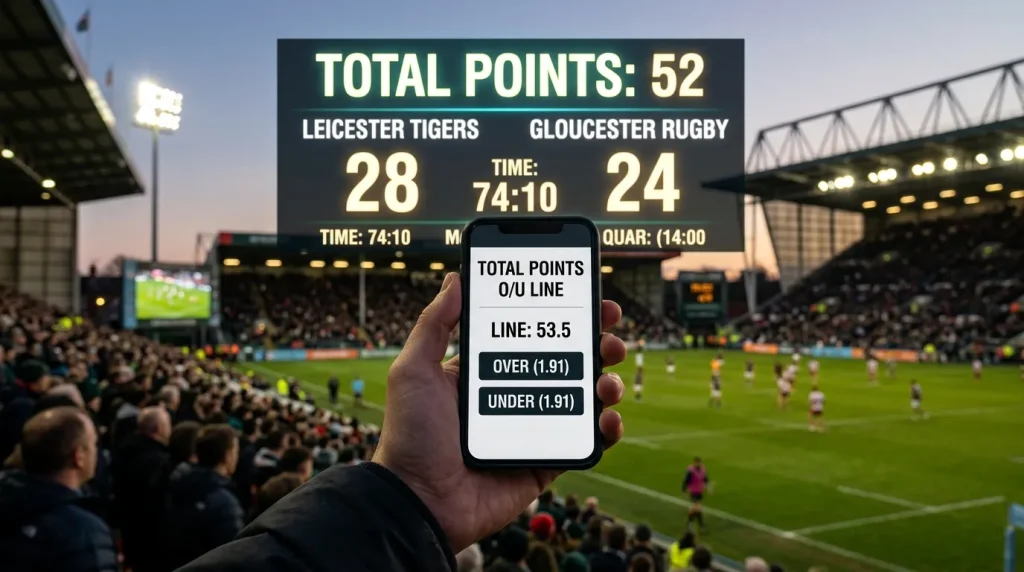
What a total points line tells you about both sides at once
I have a friend who only bets totals. Never picks a winner. Never touches a handicap. He claims, with a straight face, that the total points line is the single most informative number on any rugby coupon, and after watching him beat the books for three Six Nations campaigns I am inclined to agree.
The total points line is a forecast of how many points both teams will combine to score. It folds attack, defence, pace and conditions into one number. You bet over or under that number. Settle at the final whistle. Simple market. The information it carries about the bookmaker’s view of the match, however, is anything but simple, and once you start reading totals as a signal, you stop being a punter who guesses winners and start being one who understands matches.
How a total is set on a rugby match
A total starts the same way a handicap does — with a projected score for each side. The trader runs both teams through a model that spits out expected points, then adds them together. If the model says England 32, Italy 14, the projected total is 46. That number gets nudged up or down half a point at a time toward the side the trader expects to attract more money, and the over/under line is set just shy of that adjusted figure.
The thing most punters miss is that a total reflects the bookmaker’s confidence in both attacks and both defences working at average levels for eighty minutes. Real matches do not deliver average performance. They deliver lopsided halves, red cards, weather-driven kick-fests and the occasional 60-point dismantling that no model saw coming.
The Premiership in the 2024-25 season ran 90 matches with 714 tries between them — an average of 7.9 tries per match, which translates to a typical points-per-match figure in the high forties once conversions, penalties and drop goals are added in. That gives you a baseline. Most Premiership total lines sit between 45.5 and 56.5, with the centre of gravity at about 50. When you see a line above that band, the bookmaker is forecasting an unusually open match. When you see one below it, they are expecting a tight, kick-heavy affair.

The Champions Cup in 2024-25 averaged 7.71 tries per match across 63 fixtures, which lands the typical total within the same band as the Premiership but with more variance because the gap between top-tier French sides and second-tier visitors is wider than anything you see week-to-week in domestic rugby.
Union totals vs league totals — different math
Rugby union totals and rugby league totals are not the same animal, and I have watched too many punters treat them as if they were.
The two codes score differently. Union allows the maul, the lineout drive, the breakdown penalty and the territorial kick. League is faster, with a fixed six-tackle set and no contestable kick at the breakdown. The structural result is that league produces more tries and more points per match almost everywhere it is played at top level. League total lines sit higher than union total lines for fixtures of similar profile, sometimes by 8 or 10 points.
A typical Premiership union match might price at over/under 51.5. A typical Super League match between two evenly matched sides might price at 42.5 or 44.5. Despite the lower line, that league total represents a higher tries-per-match expectation because each league try is worth 4 points plus a 2-point conversion (so 6 points per converted try, versus 7 for union). The maths is not intuitive until you sit with it. A league match that finishes 22-18 is 40 points and probably six or seven tries. A union match that finishes 22-18 is 40 points and four or five tries plus boots.

Punters who watch both codes get this. Punters who only watch one and dip into the other do not. If you have just discovered Super League because Betfred’s branding follows you everywhere, do not transfer your union total instincts onto a league coupon. The lines are calibrated to different scoring distributions and will punish a flat read.
Weather, pace and how totals move in-play
The most predictable total movement I have seen in twelve years of bet logging happens in the half hour before kickoff when the weather decides to ruin a coupon. A line of 53.5 set at noon for a Twickenham fixture can drop to 48.5 by 2 pm because the wind has turned and the rain has settled in. Punters who placed pre-line at 53.5 are not wrong. They are early, and they have already collected the value the late movement will not give the in-play crowd.
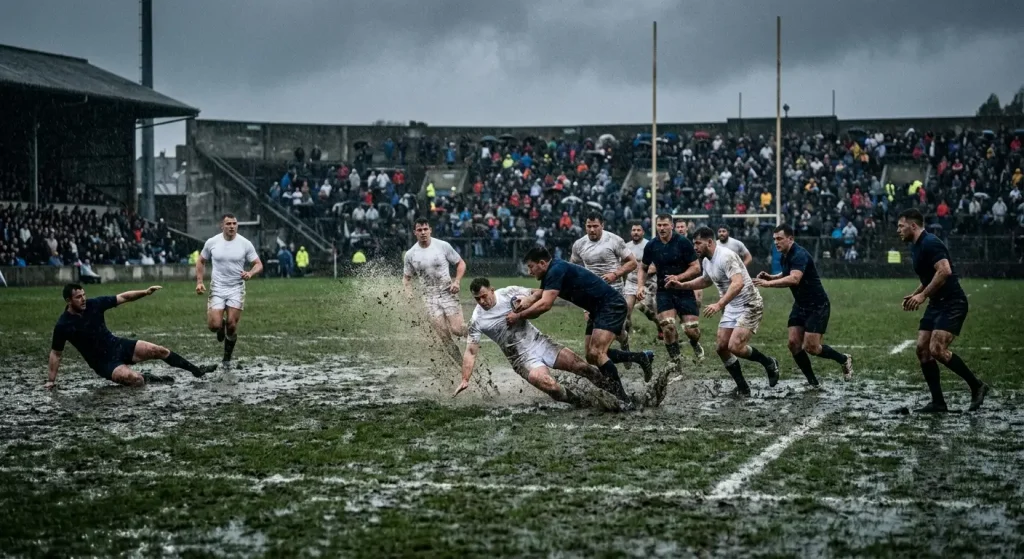
Wet conditions compress totals because handling deteriorates, both sides kick more, and tries become harder to score. Cold conditions tighten lineout precision and slow rucks. Wind affects kicking accuracy at both ends; sometimes that pushes totals up if penalty kicks miss and territory cycles, sometimes it pushes them down if matches turn into bog-set possession battles. Sun does almost nothing to a rugby total. Snow voids the match.
Pace inside the match matters too. A red card in the first quarter flips the total line. If the red comes against the favourite, the underdog suddenly has space to score and the line shortens at the over. If the red comes against the underdog, the favourite piles on and the same thing happens, just bigger. In-play total markets reprice at every conversion, every penalty, every TMO review, and the speed of that repricing varies hugely between sites. Live total betting is profitable for sharp punters and a graveyard for impulsive ones.
The other moving piece is the bonus-point chase. In rugby union, a team scoring four or more tries earns a bonus league point. A side leading 24-3 in the seventieth minute will keep attacking if they are one try short of four, and that pursuit lifts totals near the end. The bonus point is a structural reason why late tries cluster in matches that look already-decided, and it is the single biggest reason why punters who back unders late in the match get burned more often than punters who back overs.
Alternative totals and team-totals
The main total line is one number with two outcomes. Alternative totals are a ladder of numbers, each priced separately, and they give you a way to express a more specific view than just “over” or “under”.
If the main total is 51.5, you might find alternative totals at 44.5, 47.5, 54.5 and 57.5 with corresponding prices. Buying an over at a higher alternative — say over 54.5 priced at 5/4 instead of over 51.5 at 10/11 — is a way of saying you do not just think the match will be open, you think it will be properly open. Selling an under at a lower alternative does the same thing in reverse.
Team totals are the same idea applied to one side. Instead of a combined total, you back one team to score over or under a number on their own. Team totals are useful when you have a directional view. You think the favourite will score heavily but you have no idea about the underdog because they might park the bus or fall apart. The combined total mixes those into one number; the team total isolates your view to the side you actually understand.
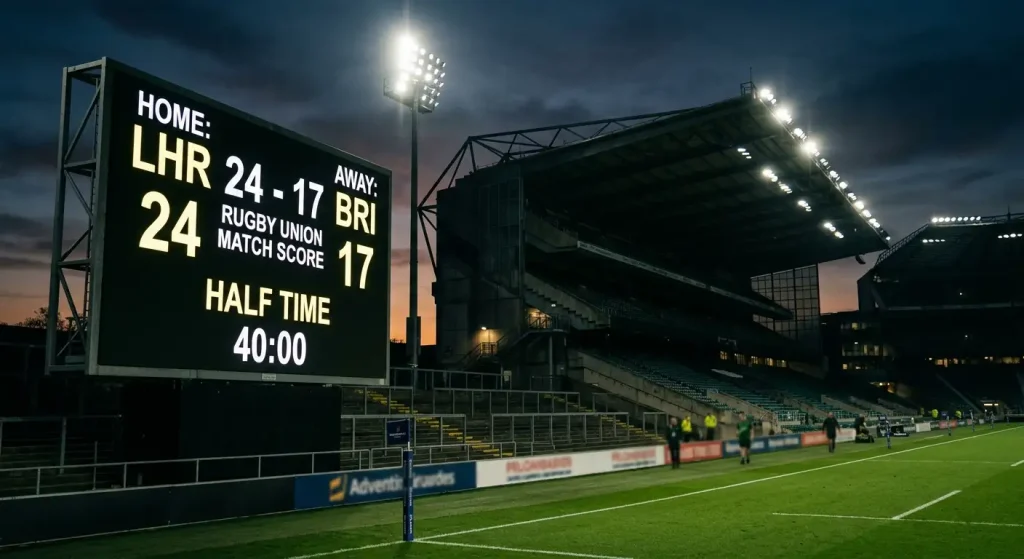
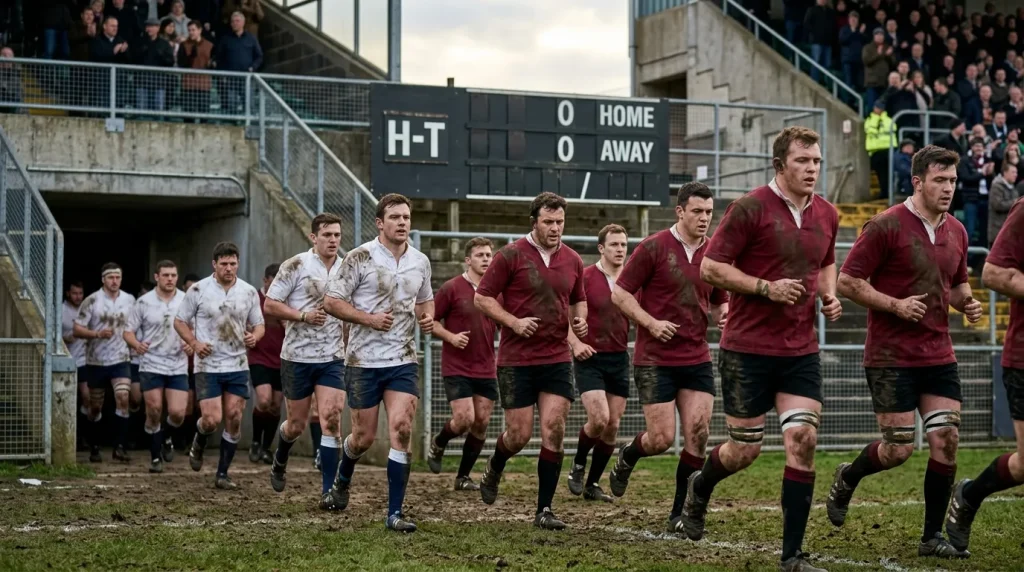
Half-time totals are available too, and they have a quirk worth knowing. Rugby totals are usually back-loaded — the second half produces more points than the first because defences tire, replacements arrive and matches stretch. A 51.5 full-match line implies maybe a 22.5 half-time line, but the gap between half-time totals and full-match totals is not 50/50. Half-time over bets are not just full-time over bets halved; they are their own market with their own pricing logic.
If you want to combine the total with a directional view on the match scoreline rather than a combined points figure, that is where rugby winning margin betting picks up. The winning margin market shares the same scoring distribution but slices it differently, and the two markets together give you a richer view than either alone.
How to read a total without making a bet
The most useful thing you can do with a total line is sit with it for ten minutes before deciding to bet anything else. The total tells you whether the book thinks the match will be a shootout, a kicking duel, or a tight grind. That information shapes everything else on the coupon.
High total, short price on the favourite, generous prices on tryscorers — this is a match the book expects to be open and high-scoring. Try-scorer markets are more useful here than handicaps, which will price the favourite at large covers that may not land if the match becomes a points shootout in both directions. Low total, short price on the favourite, long try-scorer prices — this is a kick-heavy fixture where the win line is the cleanest bet, and try-scorer punts are likely to be settled by penalty tries or set-piece scores from forwards rather than wide finishers.
You do not have to bet the total. You just have to read it. Once you start doing that, every other market on the coupon makes more sense.
Why are league totals routinely higher than union?
Rugby league produces more tries per match than union because the six-tackle structure forces continuous attack and removes the contested breakdown. Even though each converted league try is worth 6 points versus 7 in union, the higher try volume pushes typical totals upward by 8 to 10 points over comparable fixtures.
Does rain always lower the line?
Heavy rain compresses totals in almost every fixture because handling errors increase and both sides kick more. Light rain has a smaller effect, and a wet ball at a free-flowing venue like the Stoop can still produce a high-scoring match. The weather alone does not set the line, but a confirmed downpour 90 minutes before kickoff usually drops the total by three to six points.
Can I bet half-time team totals on rugby?
Yes. Most UK rugby coupons offer half-time team totals for top-tier fixtures, especially in the Six Nations and Premiership. The lines are smaller than full-match totals and the prices are tighter, so they reward punters who know one side"s first-half tendencies — fast starts, slow starts, kick-heavy openings — rather than punters guessing at general scoring patterns.
Articles
Written by the editors at Rugby Betting Sites.
