
Ante-Post Rugby Betting — Backing a Side Months Before Kickoff
 Available in US
What ante-post means in rugby and where it pays off
I keep a notebook of ante-post bets that did not work out. It is depressingly long. A 14/1 on Wales in the 2019 Six Nations that became 9/4 by the end of round two. A 50/1 on Argentina at the last World Cup that became 16/1 by the quarter-finals and then evaporated. The notebook also has the ones that landed, and those bets are where my ante-post discipline came from. Ante-post is a slow craft. It rewards patience, punishes complacency, and runs on a different clock to the rest of the betting calendar.
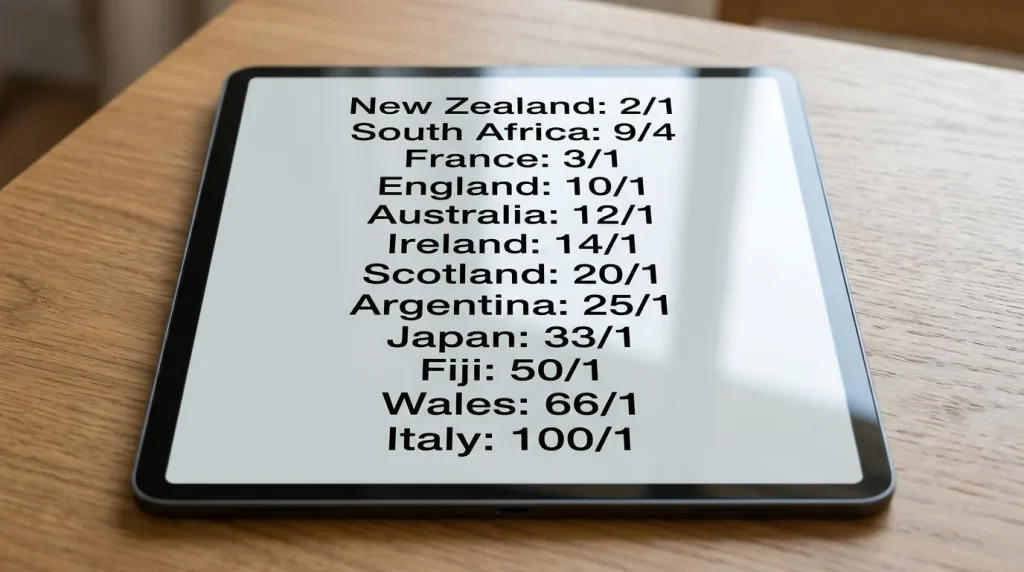
Ante-post is the umbrella term for bets placed before the event has begun and, in many cases, before the participants are fully confirmed. In rugby, ante-post markets cover tournament outrights, top try-scorers, group winners, stage-of-elimination markets and futures on a side’s final league position. The defining feature is time. An ante-post bet placed in January on the Six Nations runner-up market does not settle until March. A Rugby World Cup ante-post bet placed in early 2025 will not settle until November 2027.
The tournament cycle and when ante-post pricing opens
Each rugby tournament has its own ante-post rhythm. Knowing the rhythm is half the work.
The Six Nations opens ante-post markets in late summer the year before, gets serious pricing in November, and tightens through January as fixture details emerge and squad announcements happen. Outright winner markets are usually live by the previous September. Top try-scorer markets and Grand Slam markets follow in October and November. By the time the tournament kicks off, the prices have tightened considerably from their opening levels, especially on the favourites.
The Premiership and the URC follow the season calendar. Outright winner markets open in August, before the first round, and trade through the autumn at moderately liquid levels. By the end of December, the contenders are clearer and the prices reflect that. Mid-season ante-post is available but the value windows are smaller because the form is largely visible.
The Rugby World Cup is the long game. The 2027 tournament in Australia expands the field from 20 to 24 teams across six pools of four, with the final scheduled for 13 November 2027. Ante-post markets for the 2027 World Cup opened in early 2025, briefly, and got serious pricing after the pool draw in December 2025. South Africa were 9/4 to win it for a third successive time after the pool draw, with New Zealand at 7/2, France at 9/2, England at 5/1, Ireland at 6/1 and Australia at 9/1 — those were the prices in the immediate aftermath of the draw, and they will move repeatedly between then and the tournament itself.

The pattern across competitions is the same. Ante-post prices open wide, tighten as information emerges, and tighten further as the event approaches. The window for genuine value is the early months when the field is uncertain and the bookmakers are pricing on incomplete information.
Non-runner rules and how UK books handle squad changes
Rugby ante-post has a problem football does not. Squads change between the bet and the settlement. A back-row forward you backed for top try-scorer might break his ankle in October and miss the tournament. A side you backed for the outright might be missing three Lions players by the time the tournament starts.
UK bookmakers handle this through non-runner rules. The default treatment varies between sites, and you need to check the rugby rules page before you stake on a long-dated ante-post. The most common rule is that ante-post bets on a named player stand even if the player does not take the field. If you backed a wing at 25/1 for top try-scorer of a tournament and he is ruled out in pre-season, the bet is settled as a loser and your stake is gone.
The minority rule, used by a few UK sites, is non-runner-no-bet on rugby. If the player does not start the tournament, the bet is voided and the stake refunded. This is more punter-friendly but is offered selectively, usually on top-tier player markets in the World Cup and Six Nations. The other middle-ground rule is “rule 4 deductions” on outright markets, where the price you backed is reduced by a published percentage if a withdrawn participant was a meaningful component of the original odds calculation.

Squad changes for international tournaments do not usually void team-outright bets. The team itself participates regardless of who is in the squad. The bet you placed is on the team, not the lineup. This is why ante-post on a team outright is fundamentally more stable than ante-post on a player market — the team is going to play even if it plays without its best players.
Hedging an ante-post position closer to the event
The most useful skill in ante-post betting is hedging. The price you took at 25/1 in August is not the price the market is showing in March, and the gap between those prices is where you can lock in a return regardless of how the event finishes.
The mechanics are straightforward. You backed Wales at 25/1 to win the Six Nations for £20. By the final round, Wales are unbeaten and 6/4 to lift the trophy. Your bet pays £520 if Wales win. You can now back the field — the other plausible winners — at their current prices, for amounts that lock in a profit whether Wales win or not. The cost of the hedge is the stake you put on the field. The benefit is removing the variance from the position.
Hedging only makes sense when the ante-post price has moved meaningfully in your favour. If Wales are still 18/1 with one round to go, there is no meaningful hedge available. If Wales are 6/4, the hedge mathematics work. The point of hedging is to convert an open-ended position with high variance into a closed position with smaller, certain returns. The price you pay is the upside; what you keep is the locked-in profit.
The alternative to hedging in the market is cashing out, where the bookmaker offers you a single figure to settle the position. The cash-out figure is the implied lay value minus the book’s margin, and for long-dated ante-post bets that margin can be substantial. Hedging in the market gives you cleaner mathematics but requires you to find liquidity on the field at the prices you need.

If you want a more practical walk-through of the hedging mechanic on a multi-year position, the longer-form version sits in each-way rugby betting, where the place portion of an each-way bet performs some of the same protective function automatically.
Tax, payout windows and credit limits on long-term bets
UK rugby ante-post winnings are not subject to gambling tax for the punter. That has been the law in the UK since 2001 and has not changed under the 2025 regulatory shifts. The bookmaker pays the duty; the punter does not. This applies to ante-post returns just as it does to single-bet wins.
Payout windows on ante-post bets follow the settlement date of the underlying market. A Six Nations outright settles after the final whistle of the last fixture. A Rugby World Cup outright settles after the final. UK sites are required by their UKGC licensing conditions to settle within a reasonable timeframe — usually within 24 hours of the determining event — and to release funds for withdrawal subject to the standard verification checks.
Credit limits and maximum-payout rules are the part of ante-post most punters do not think about until they need to. Every UK rugby bookmaker has a published maximum payout on rugby ante-post bets. The figures vary widely — some sites cap at £100,000, others at £250,000 or £500,000 — and the cap usually applies to the total return across all your bets on the same event. If you stake £100 at 200/1 on a long shot and the long shot wins, you are owed £20,100 in returns. That is well below the cap at every UK site. If you stake £1,000 at 500/1 on the same long shot, you are owed £501,000 in returns, and at most sites that figure exceeds the cap. Your settlement would be limited to whatever the published maximum is.
UK Gambling Commission industry statistics published in November 2024 showed 2,262 operators across the regulated sector, with retail and remote betting making up the bulk of the gross gambling yield. The maximum-payout terms are buried in the rules pages of those operators and you should read them before you place a large ante-post bet. UK regulated gambling industry generated £17.2 billion in revenue for the 2025-26 reporting period, and even the largest UK operators have payout caps below the theoretical wins available on extreme-odds ante-post markets.
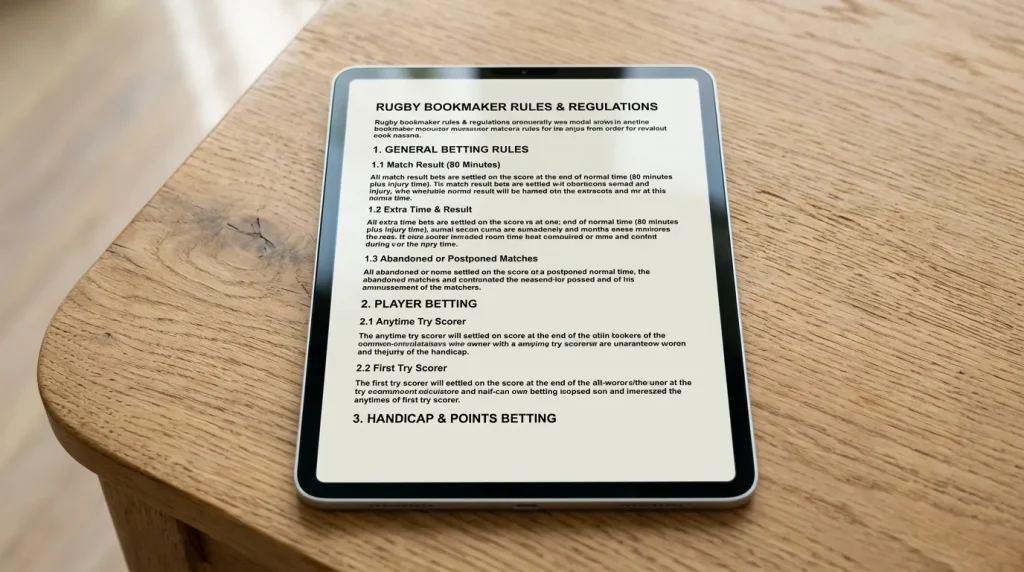
One additional consideration is that ante-post stakes are tied up for the duration of the bet. The money is committed until the event settles. That is fine on a Six Nations bet placed in November — three months tied up — but it is a more significant capital allocation on a World Cup outright placed two years out. If you would have done better with the same money in a savings account at modest interest, the implied break-even on the ante-post bet needs to clear that hurdle before it represents real return.
What ante-post asks of you
Ante-post is the slowest form of rugby betting and the one that demands the most from a punter’s discipline. You have to make a decision based on incomplete information, sit with the position for months, and resist the urge to second-guess it every time a friendly result moves the market. The bets that land remember themselves. The bets that do not are quietly recorded and learned from, until your read on the next tournament cycle gets sharper.
Does ante-post cover withdrawals before a tournament?
Most UK sites stand by ante-post bets on named players even if the player withdraws before the tournament starts. A minority of sites offer non-runner-no-bet on top-tier markets and refund stakes when a backed player is ruled out. Team outright ante-post bets stand regardless of squad changes — the team plays, your bet runs.
When do most UK books open RWC ante-post markets?
Rugby World Cup ante-post markets typically open immediately after the previous World Cup final, with light pricing through the four-year cycle and serious pricing after each pool draw. For RWC 2027, markets opened in early 2025 and tightened materially after the December 2025 pool draw. The closer to kickoff, the tighter the prices.
Can ante-post outright wins exceed maximum payout limits?
Yes, especially on extreme-odds bets at large stakes. Every UK rugby bookmaker publishes a maximum-payout cap for rugby ante-post, with figures ranging from around £100,000 to £500,000 depending on the operator. If your theoretical win exceeds the cap, settlement is limited to the published maximum. Read the rules page before staking large amounts at long odds.
Articles
Prepared by the Rugby Betting Sites editorial staff.
